Special Topic
AN INTERACTIVE INSTALLATION PROJECT
How can I use an interactive installation to educate people on the effects hormones have on people who menstruate?
Problem Statement
The Challenge
Throughout a person's menstrual cycle, they will experience what could best be described as a rollercoaster of emotional and physical ups and downs all driven by the hormonal activity happening inside their bodies.
The Gap
However, awareness and education around the role these hormones play in how we feel day to day are largely non-existent outside of the internet, often only being discovered later in life through personal experience or conversations with friends and family.
The Solution
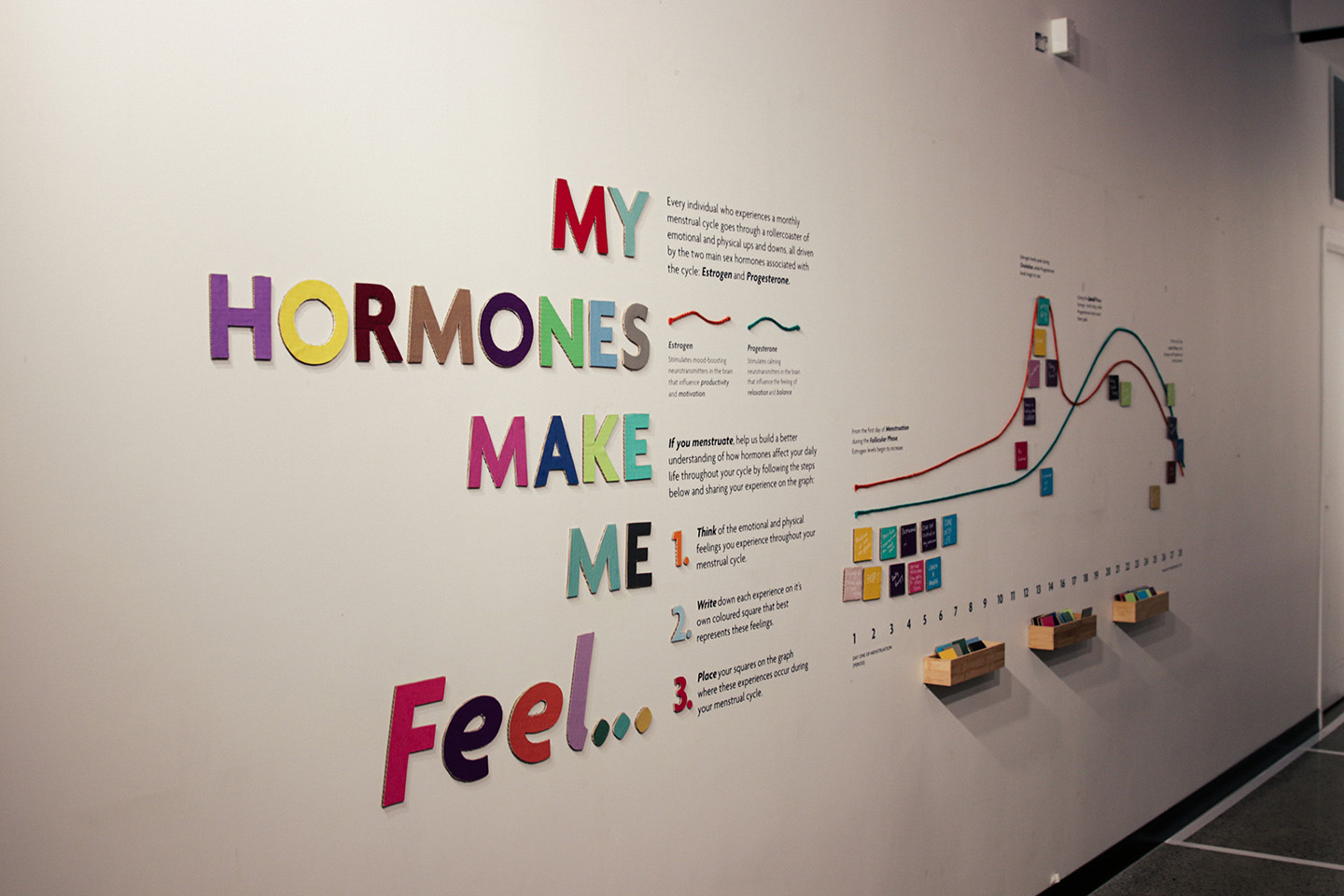
"My hormones make me feel..."
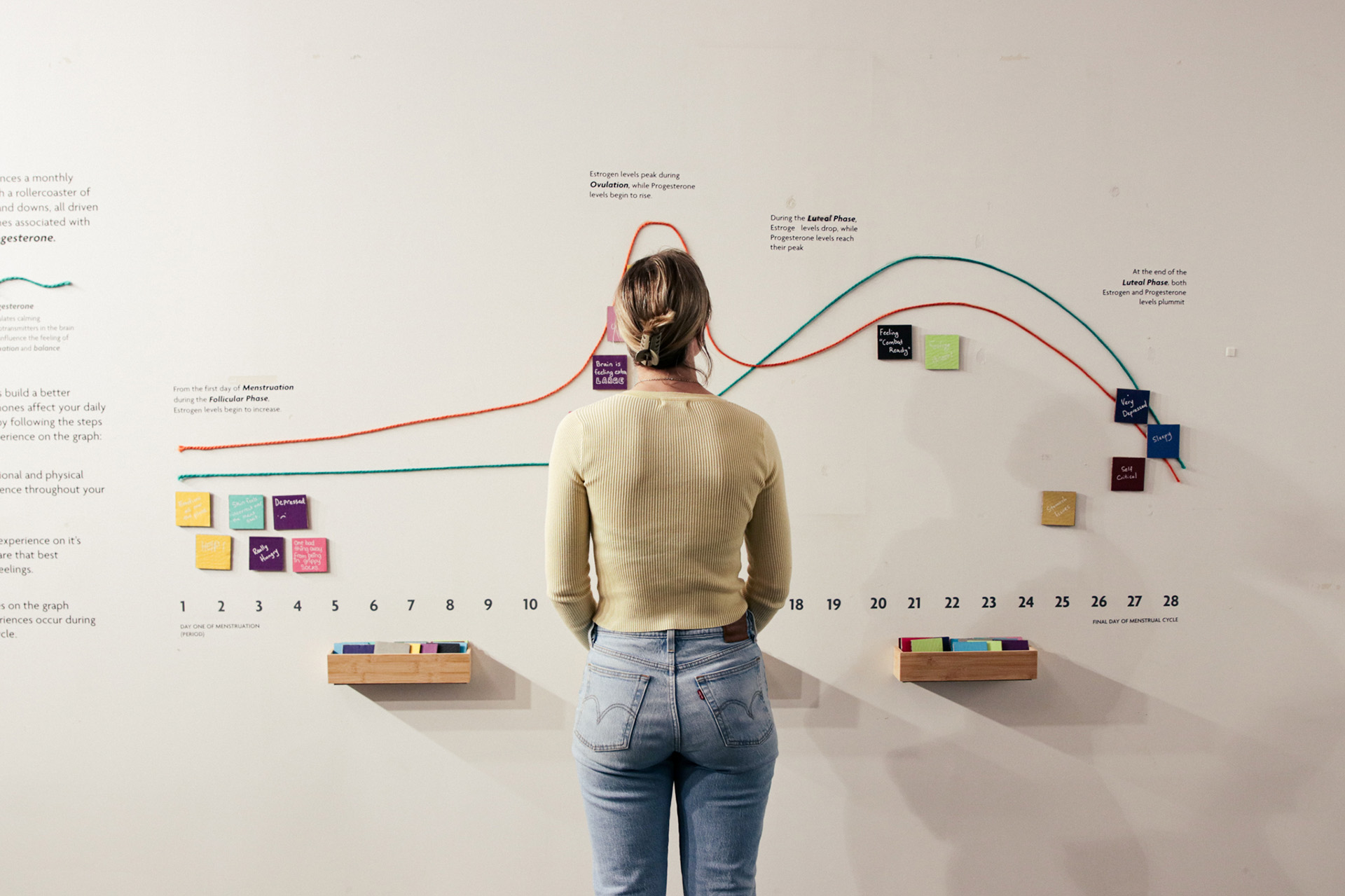
A fun and interactive installation designed to help people who menstruate become more aware of how hormones affect them, while also inviting them to share their personal experiences and opening up the conversation around menstrual health in New Zealand.
Research Phase
For this project, I set out to deepen my understanding of user experience design by exploring how my users best learn and retain information.
Secondary Research
Research on the effect of dopamine stimulation during learning and engagement.
Context Research
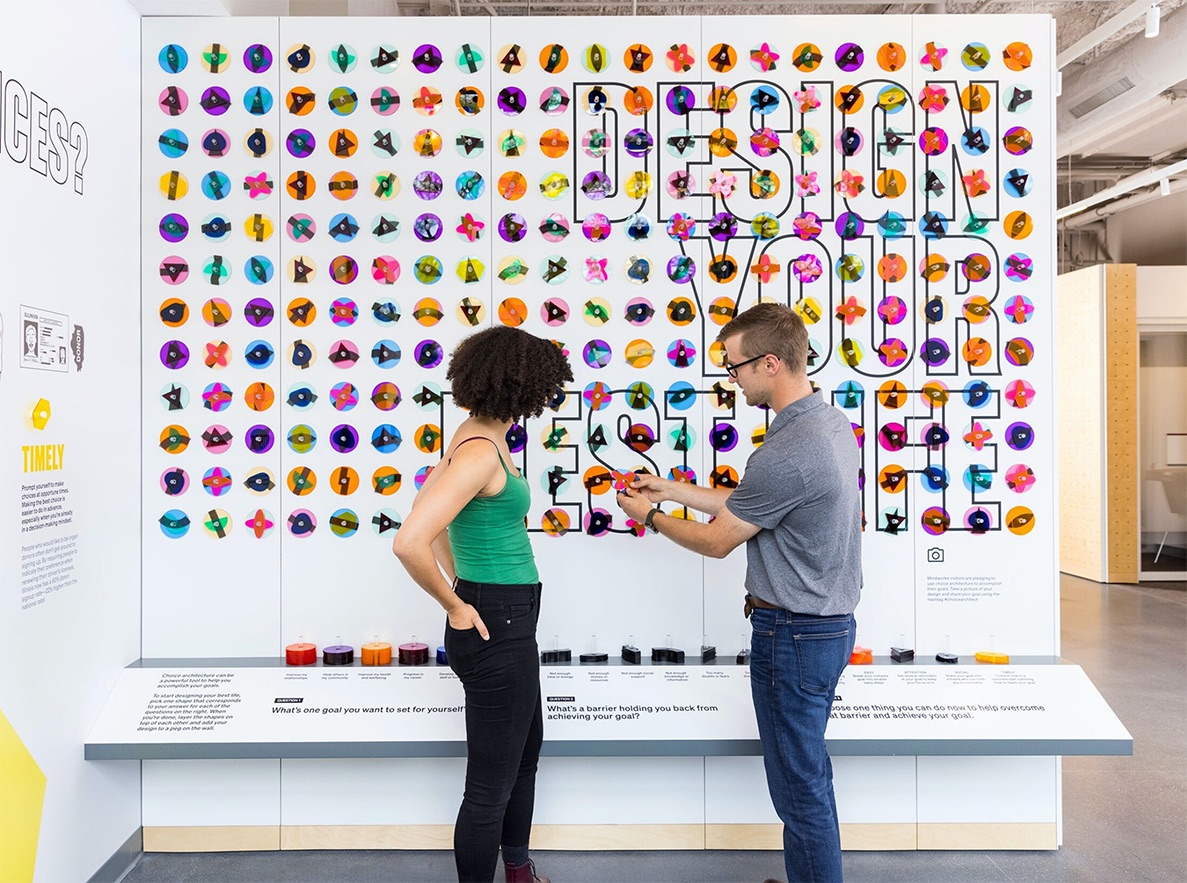
Study of existing educational installations that turn complex information into something that is more engaging and accessible to the average person.
User Interviews
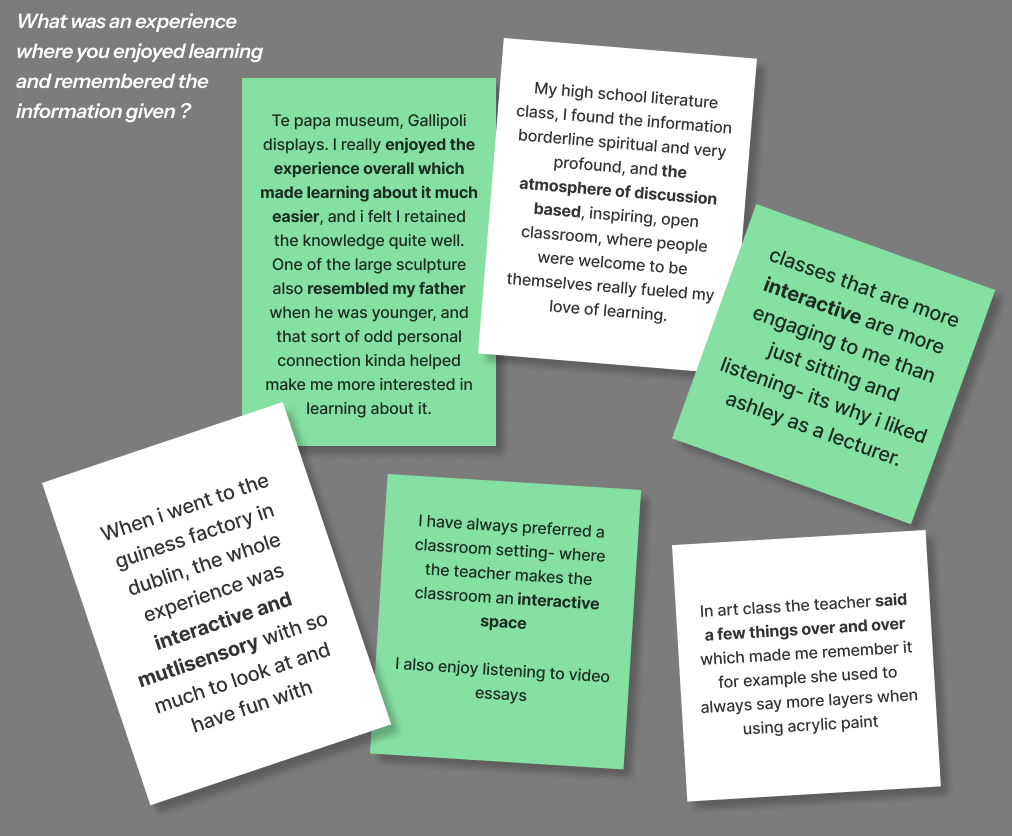
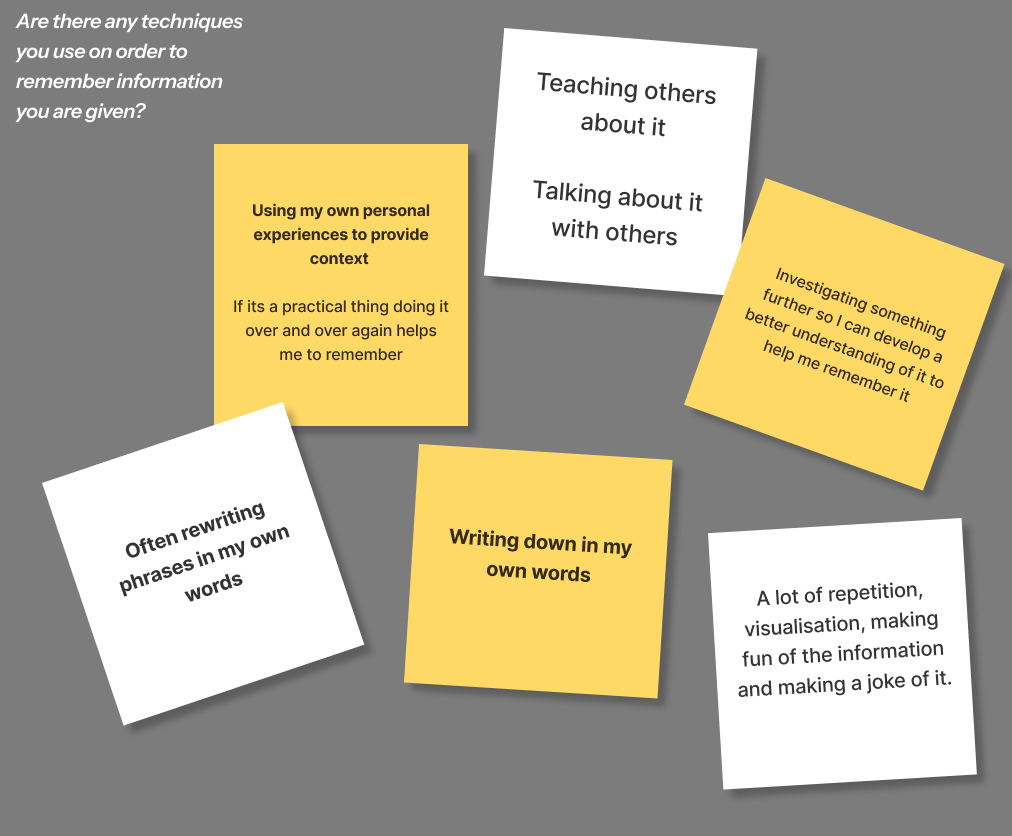
Interview sessions were done with groups of members from my target audience where I was able to build an understanding of their preferred learning styles
Key Findings
Multi-Sensory Learning
Research showed that combining visual, auditory, and tactile elements creates more effective learning experiences.
Dopamine-Inducing Colours
Bright colour combinations induce dopamine within the brain which increases engagement and also information retention.
Interactive Environments
Users prefer interactive and social environments where they can learn and discuss ideas with others.
Contextual Learning
Users need to place information into context using their personal experiences to better understand and retain what they learn.
Ideation & Strategy
Exploring solutions and defining the design strategy
User Personas
Bailey, 18 y/o female
"I only started to understand that hormones were the reason for so many things I was going through mentally and physically after I downloaded an app to track my period."
Tania, 35 y/o female
"It's been a long process of figuring it out on my own. There are a lot of things around my menstrual health that would have been great to know sooner so I could have been easier on myself."
Design Principles
- Forms of multi-sensory engagement
- Able to put the information into context
- Positive and bright visuals
- Interactive and social learning
User Journey Map
Discovery
User discovers the installation and becomes curious about learning more about hormonal effects.
Engagement
User interacts with the installation elements, learning about different hormones and their effects.
Reflection
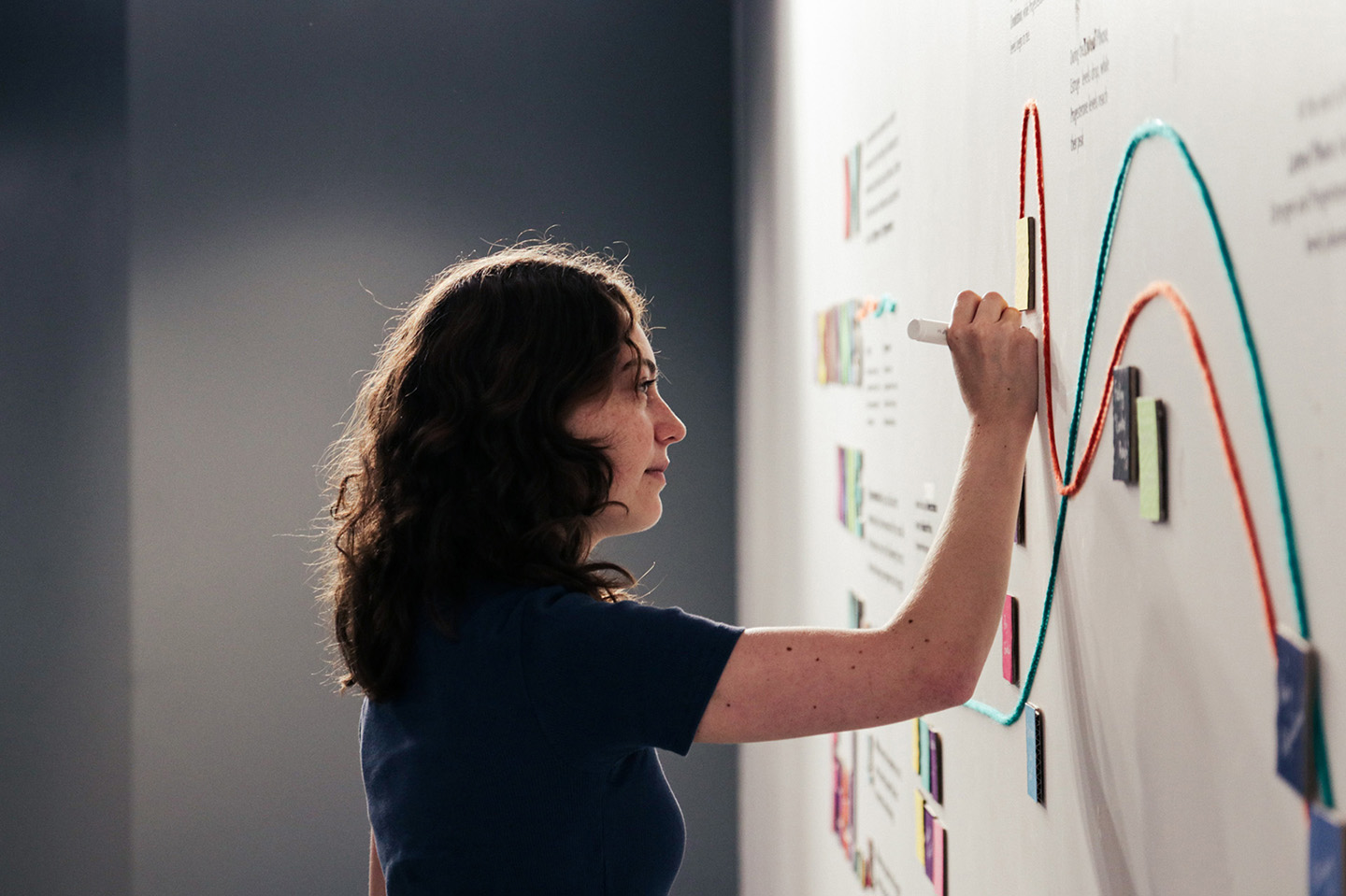
User reflects on their own experiences and shares insights on their own experiences through objects they place on the installation, as well as with others in the space.
Advocacy
User shares their experience and the new understanding she has gained of hormonal effects on her day to day life with family and friends, generating greater awareness around menstrual health.
Concept Sketches
Initial Ideas
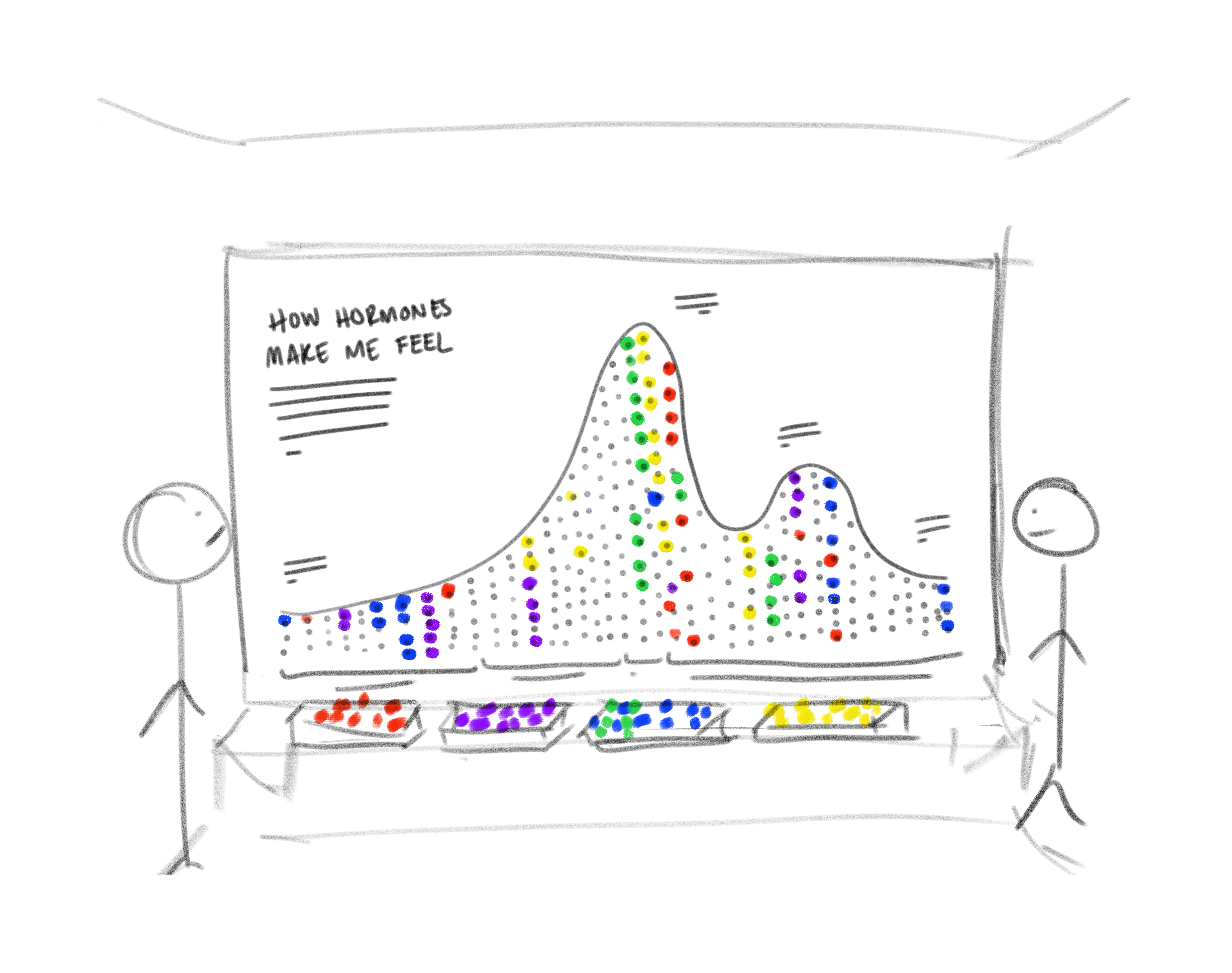
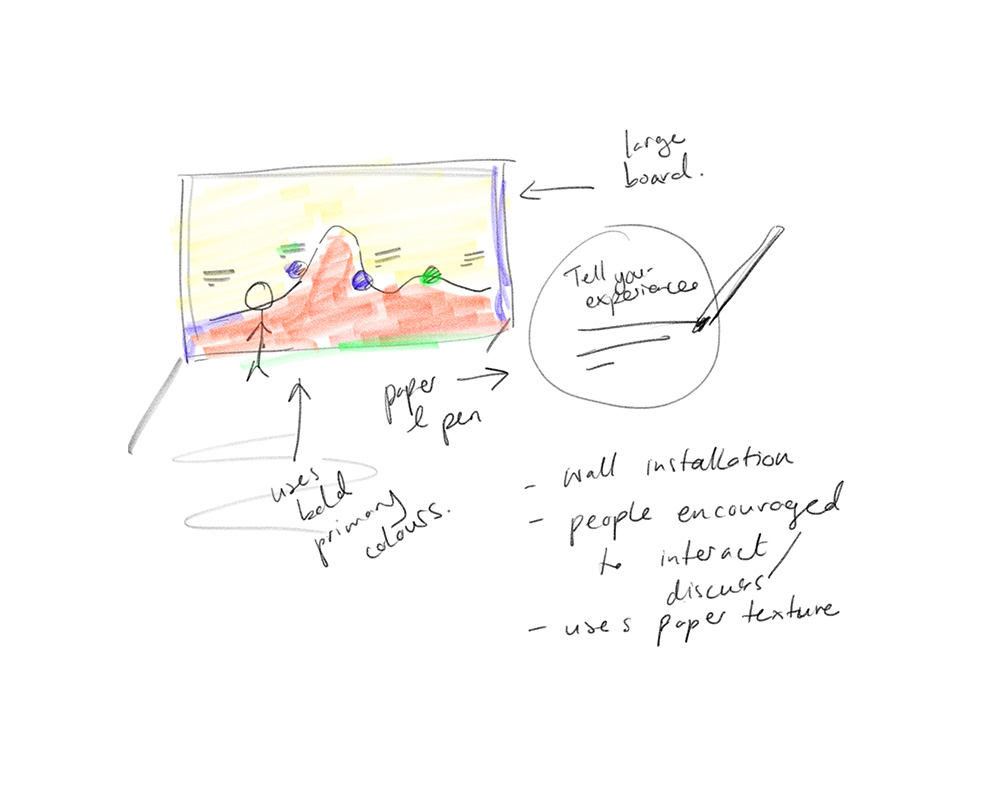
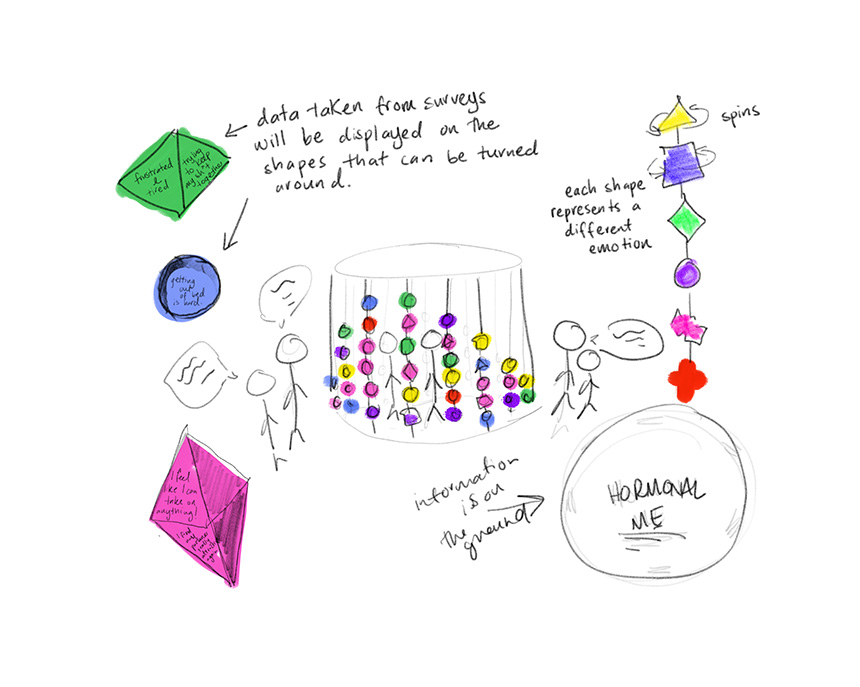
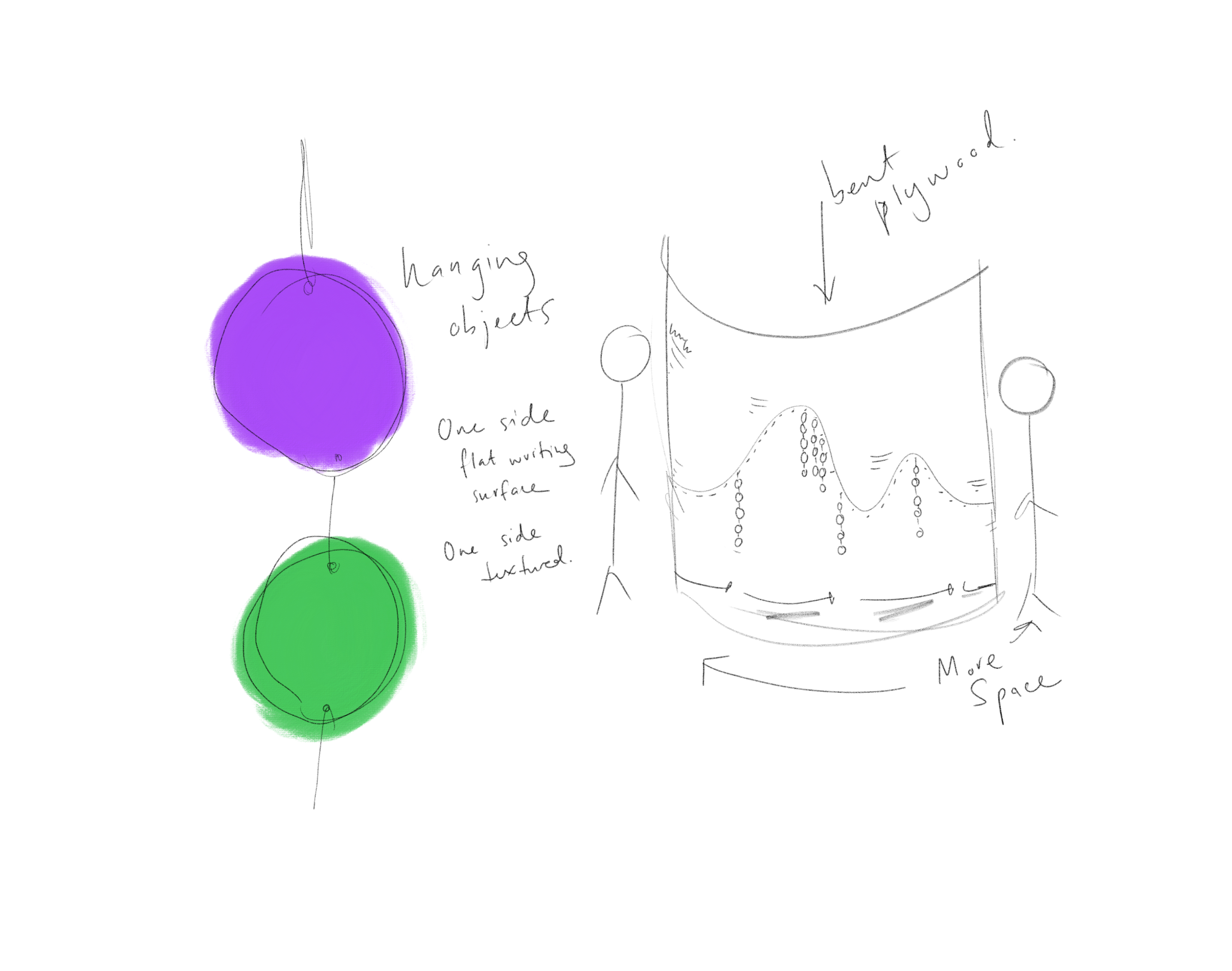
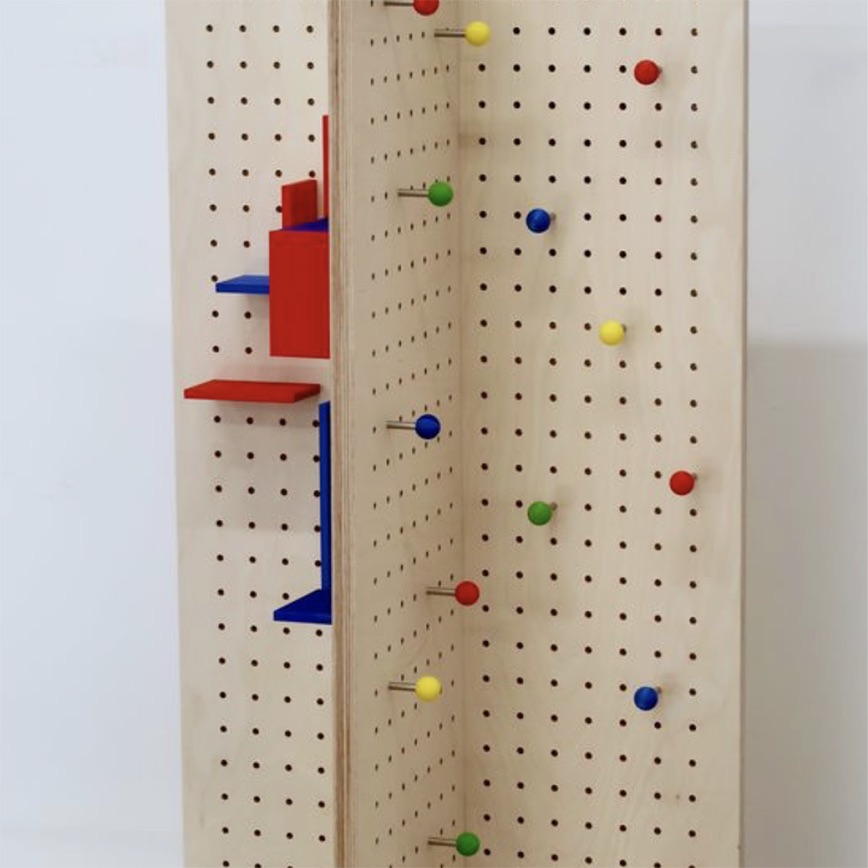
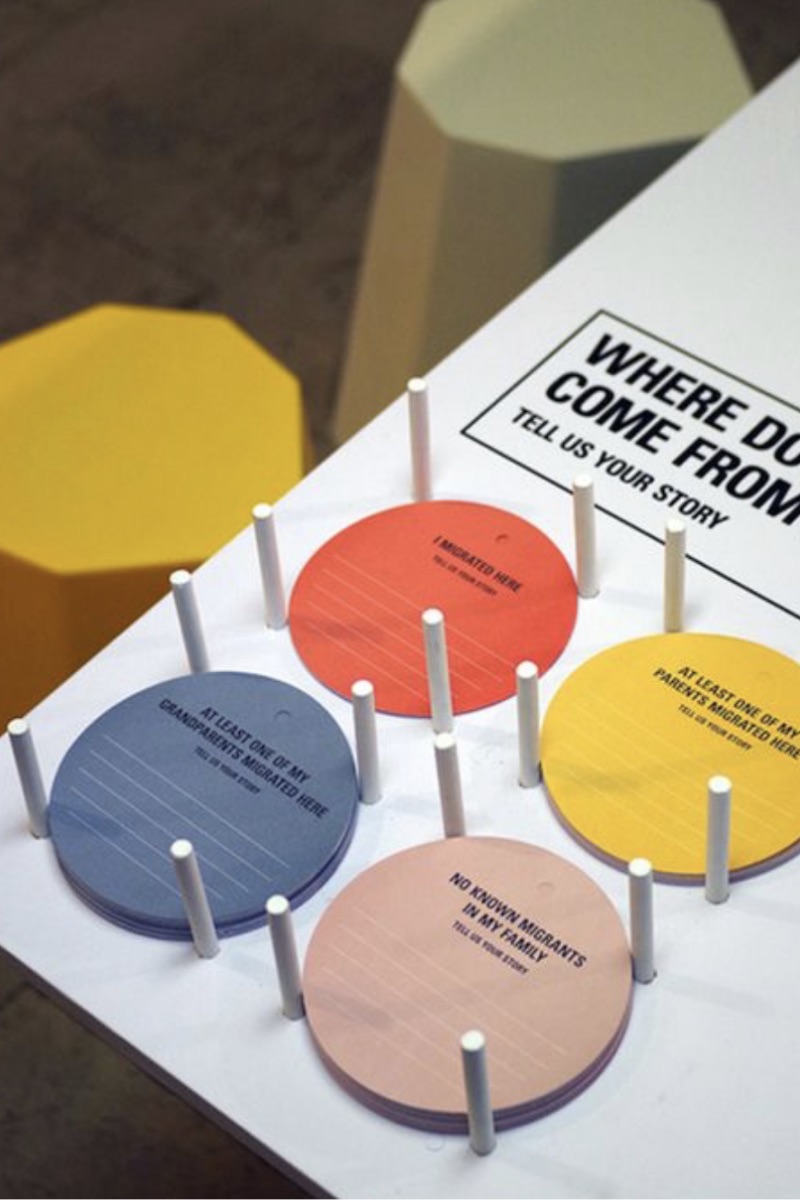
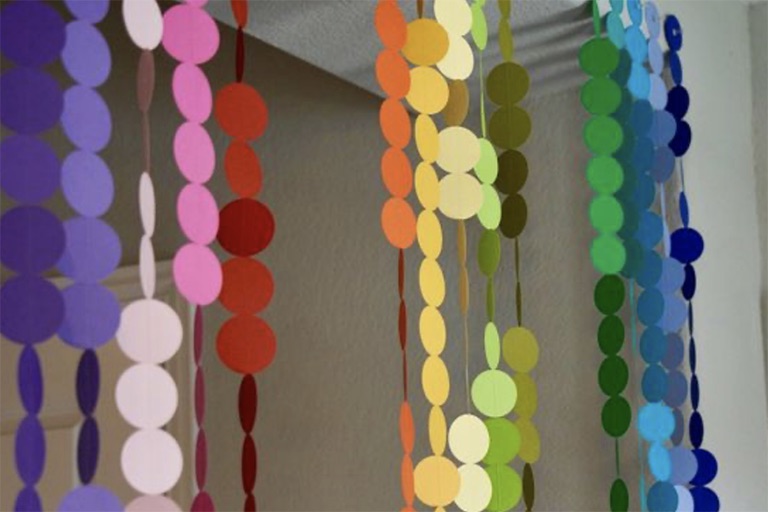
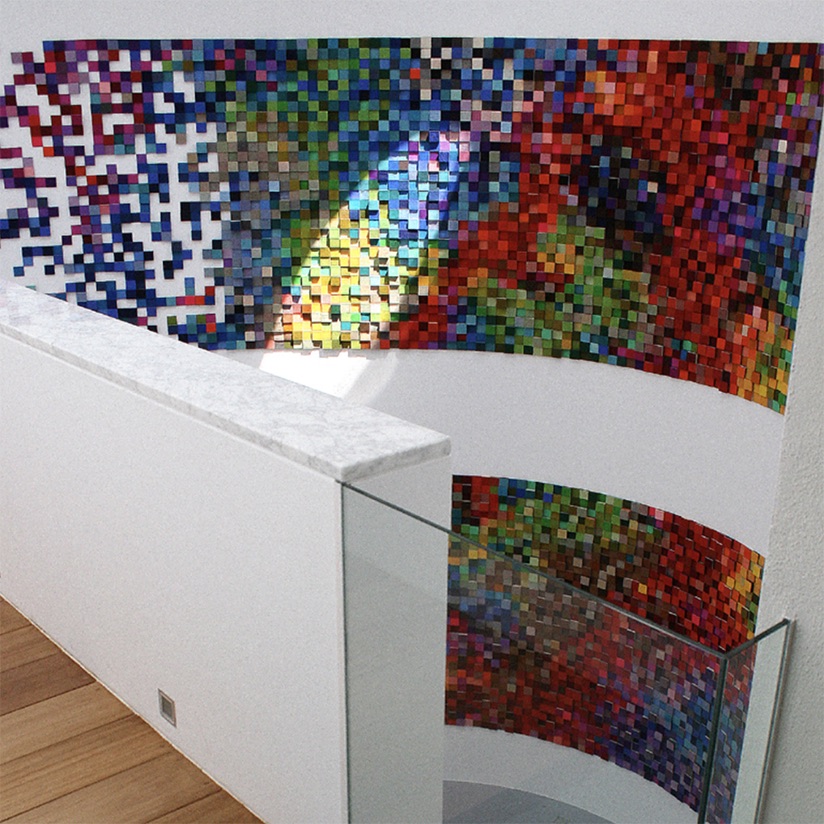
Early concept development and ideation sketches for the interactive installation.
Design Exploration
Exploring different approaches to presenting hormonal information in an engaging way.
Concept Testing
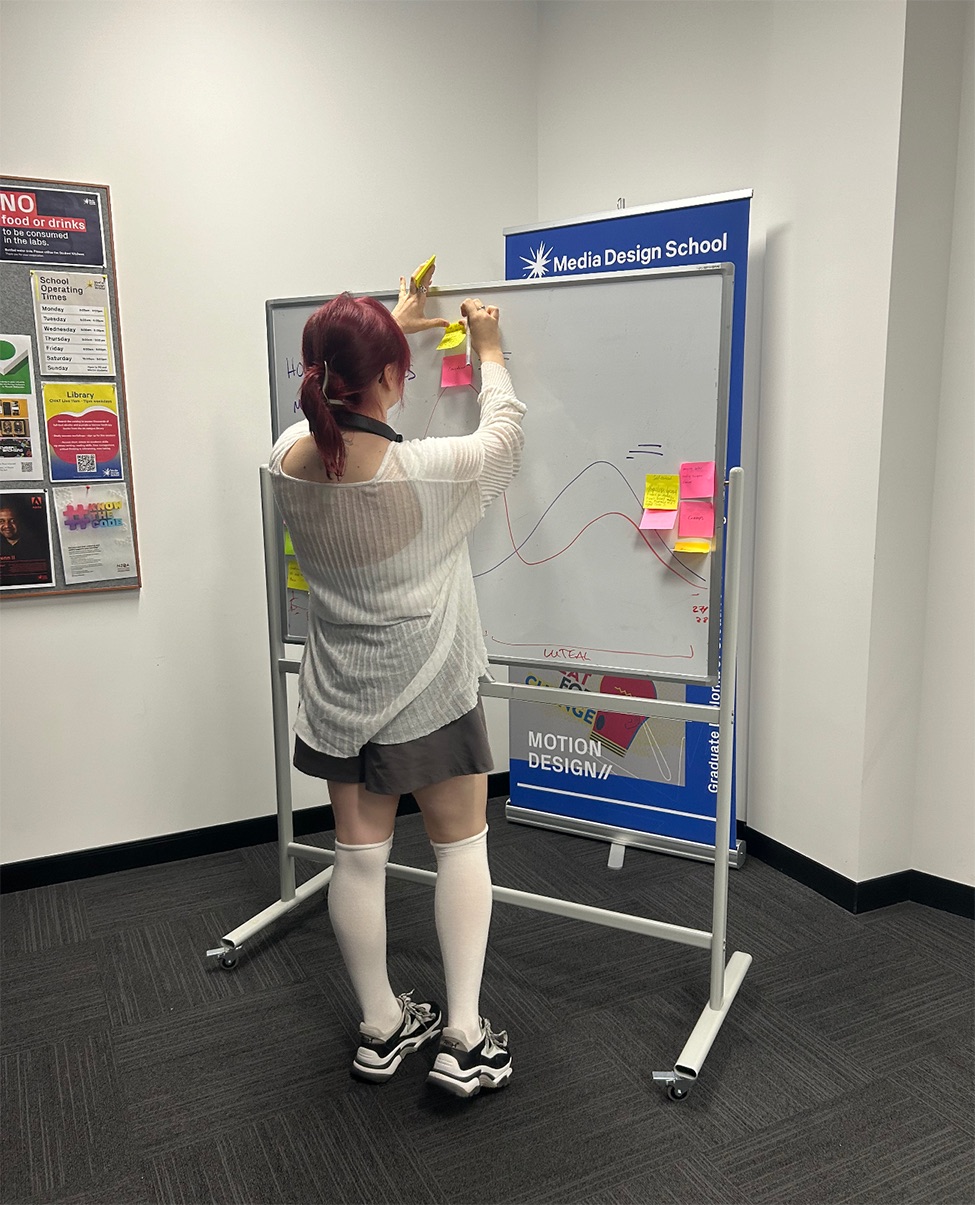
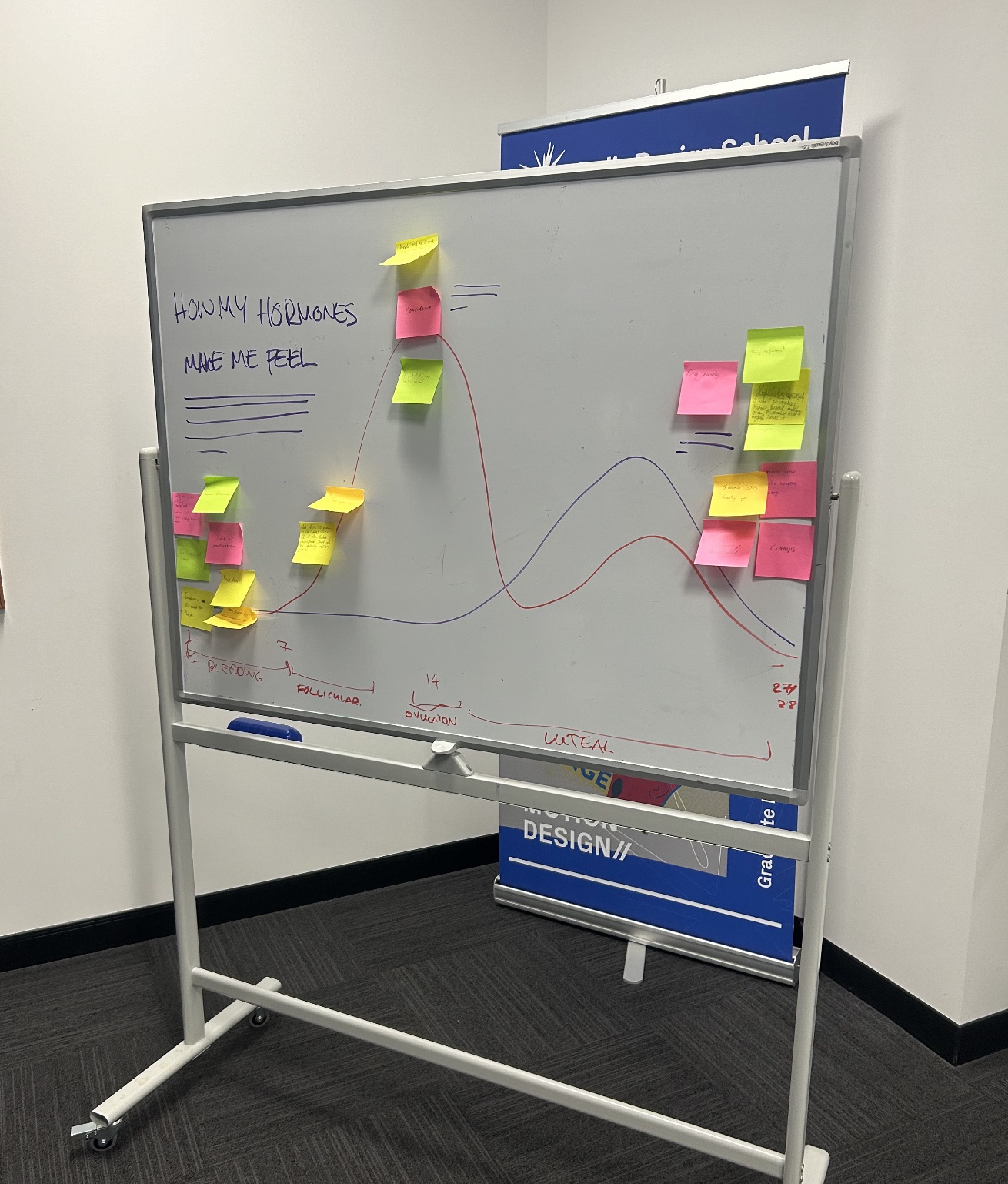
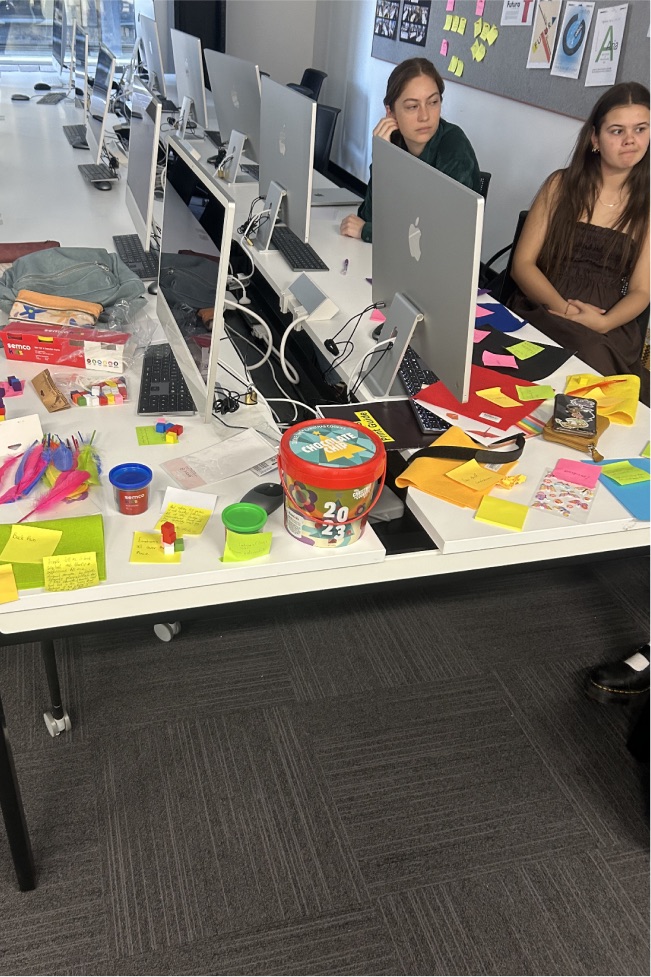
Concepts for the installation were tested through workshops with groups of individuals from my target audience, those who experienced menstrual cycles.
Participant Demographics
- Total Participants: 6 individuals
- Age Range: 20-28 years old
- Gender: 5 female, 1 non-binary
- Background: University Students
- Accessibility Requirements: One participant in a wheelchair
- Testing Method: Interactive Workshop
Testing Process
- Participants were taken through a prototype of the installation beginning with a explanation of hormonal effects on the body.
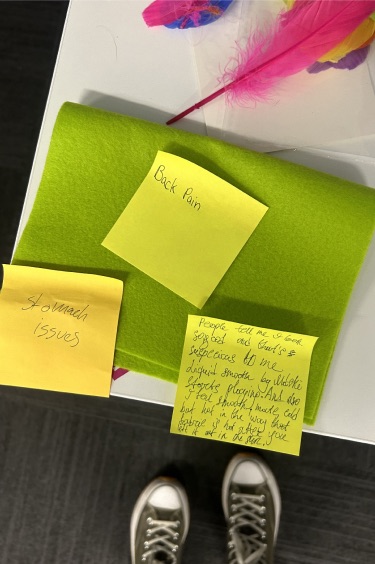
- They were then invited to share their personal experiences by writing them on stickies and placing them on the installation prototype.
- Feedback on the current prototype was collection through structured discussions.
- They then participated in a workshop identifying colour and textures with the experiences they had had.
Testing Documentation
Key Findings
Finding 1
Users enjoyed being able to write their experience down on the paper.
Finding 2
Half of the participants were unsure what to write until other who were more familiar with the topic sparked their memory.
Finding 3
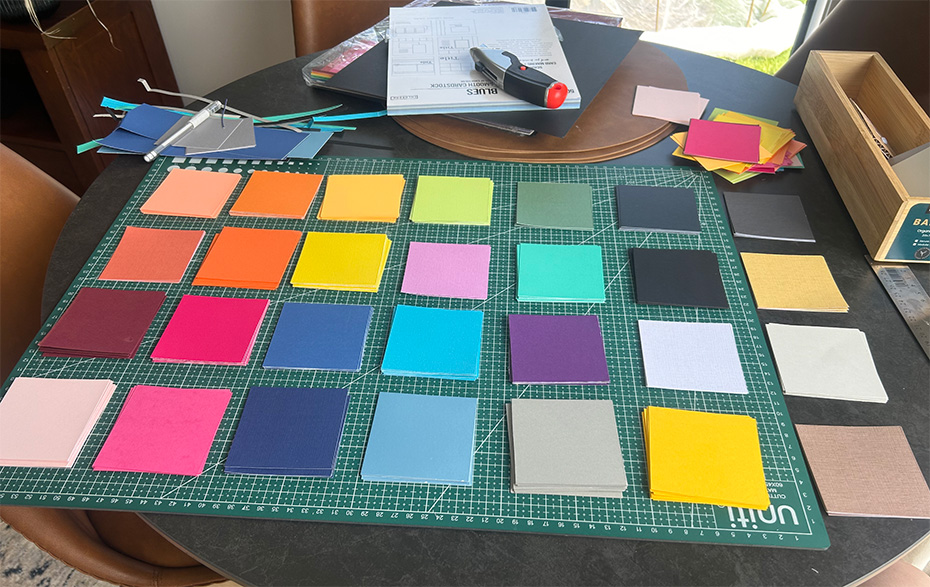
Participants wanted a lot more colour options to choose from.
Design Development
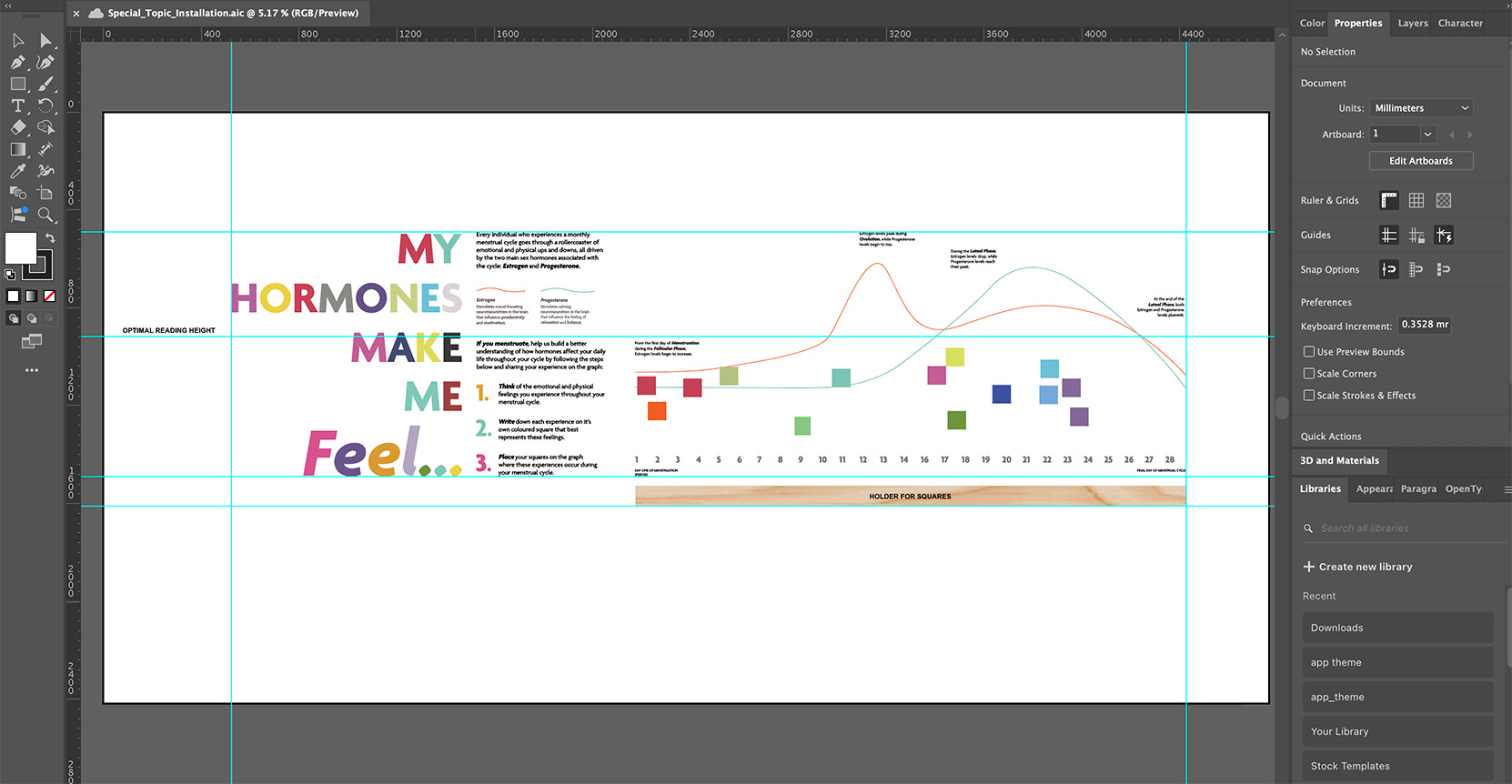
Creating the final design for the interactive installation using Adobe Illustrator
Design Process
- Narrative & Copy Writing
- Typography selection and hierarchy
- Layout design and spacing
- Colour arrangement
Design Tools
Adobe Illustrator was used as the primary design tool for creating vector graphics and ensuring scalability for the installation.
Production
Key considerations for this installation
Key Considerations
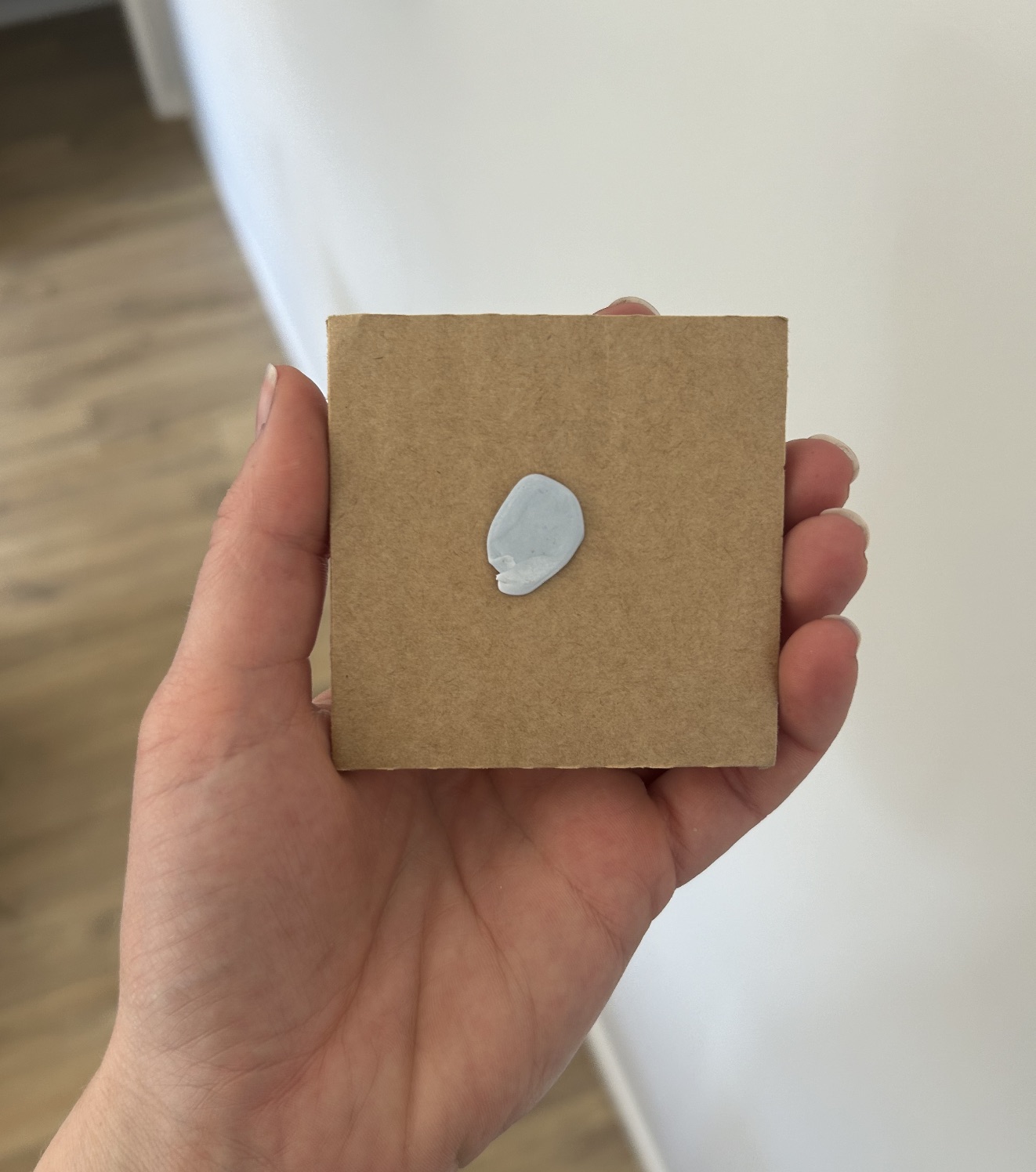
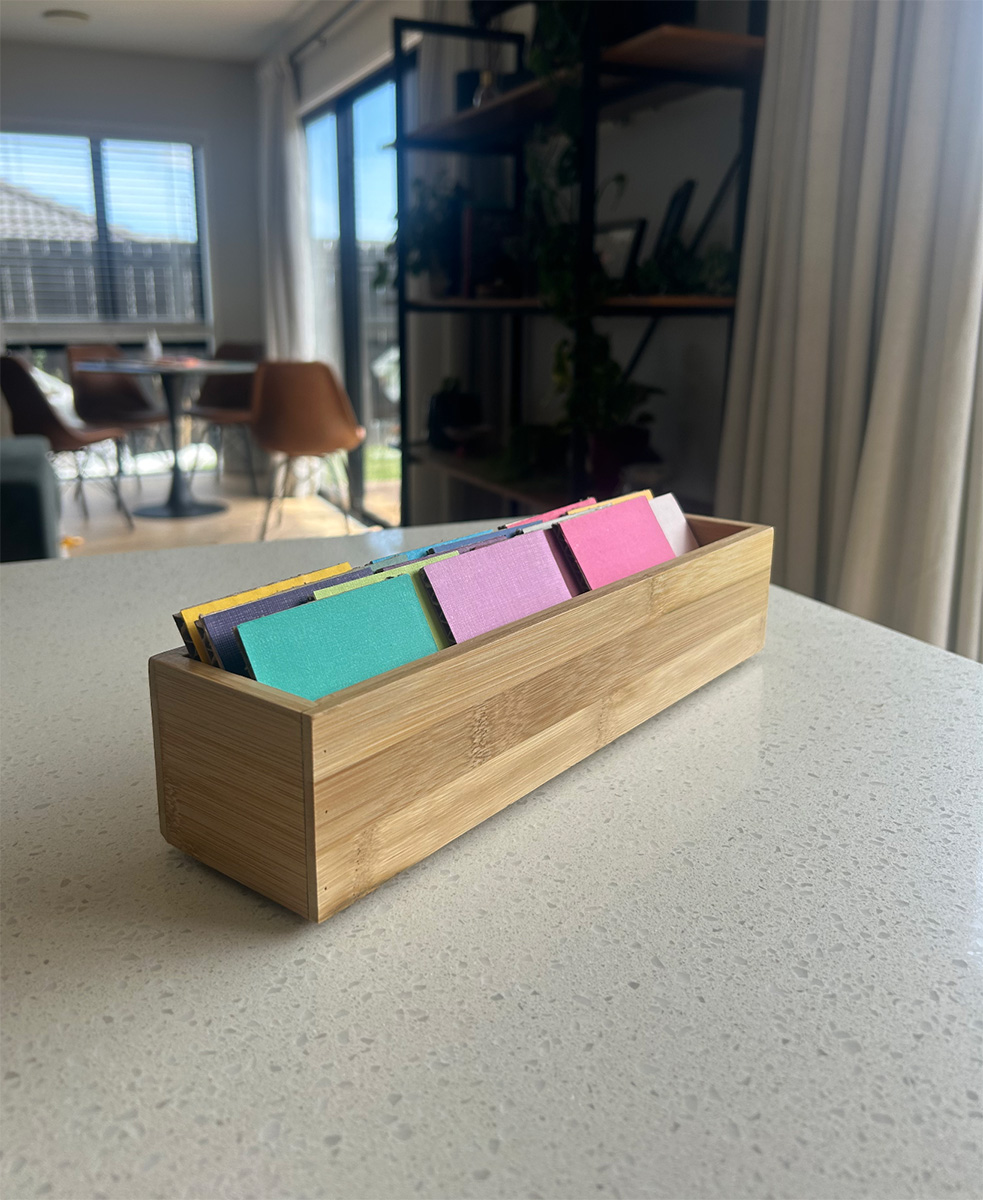
- Sustainability - Each material was selected for its ability to be re-used or re-cycled once the installation was taken down
- Durability - Materials needed to withstand multiple interactions and handling
- Cost-effectiveness - Balancing quality with budget constraints
- Ease of assembly - Materials that could be easily assembled and disassembled
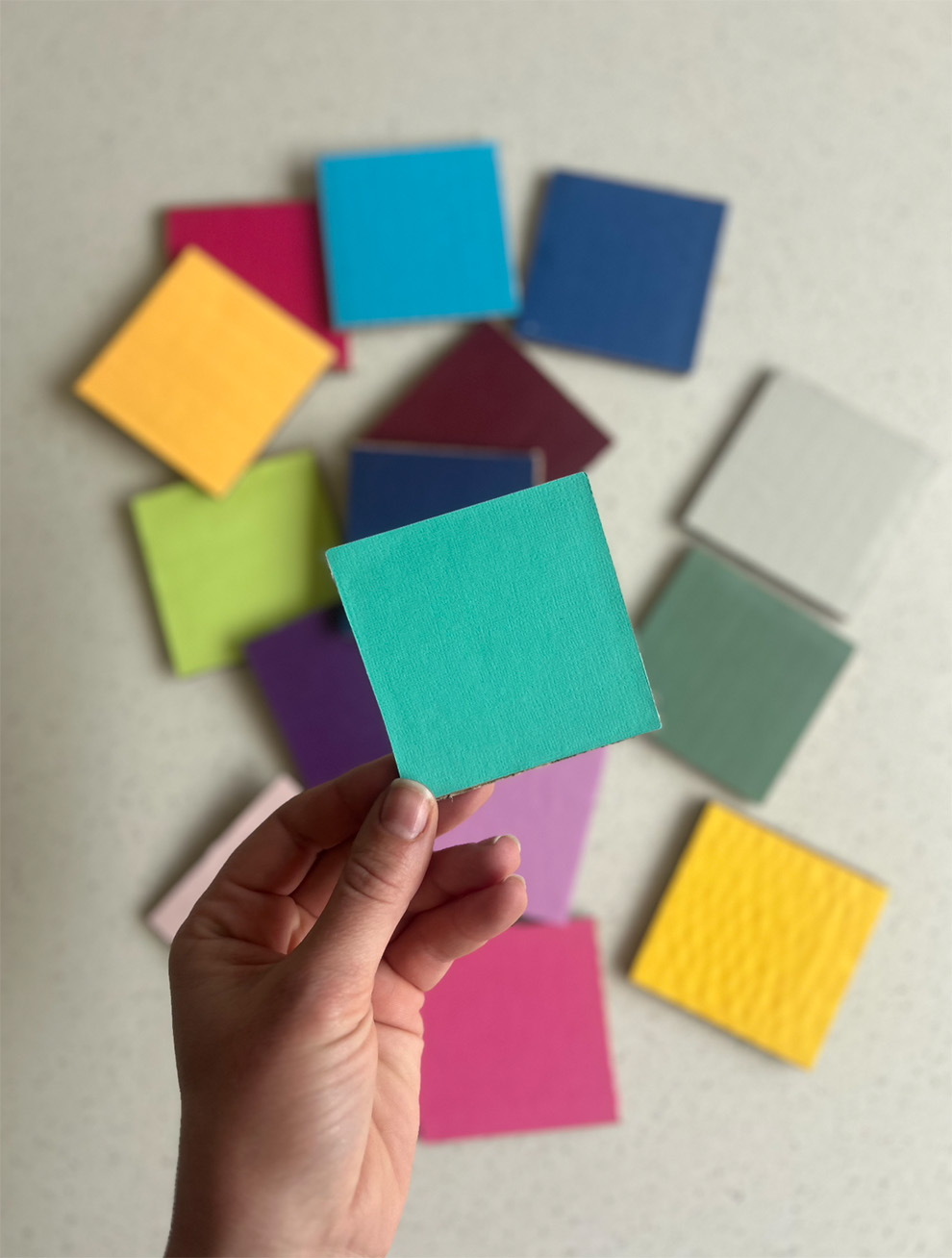
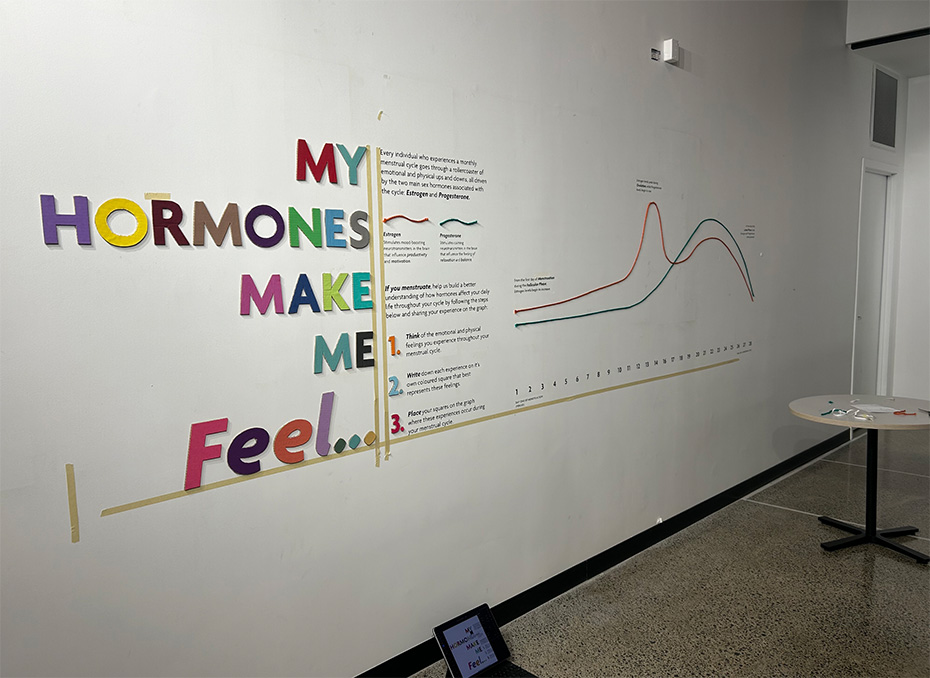
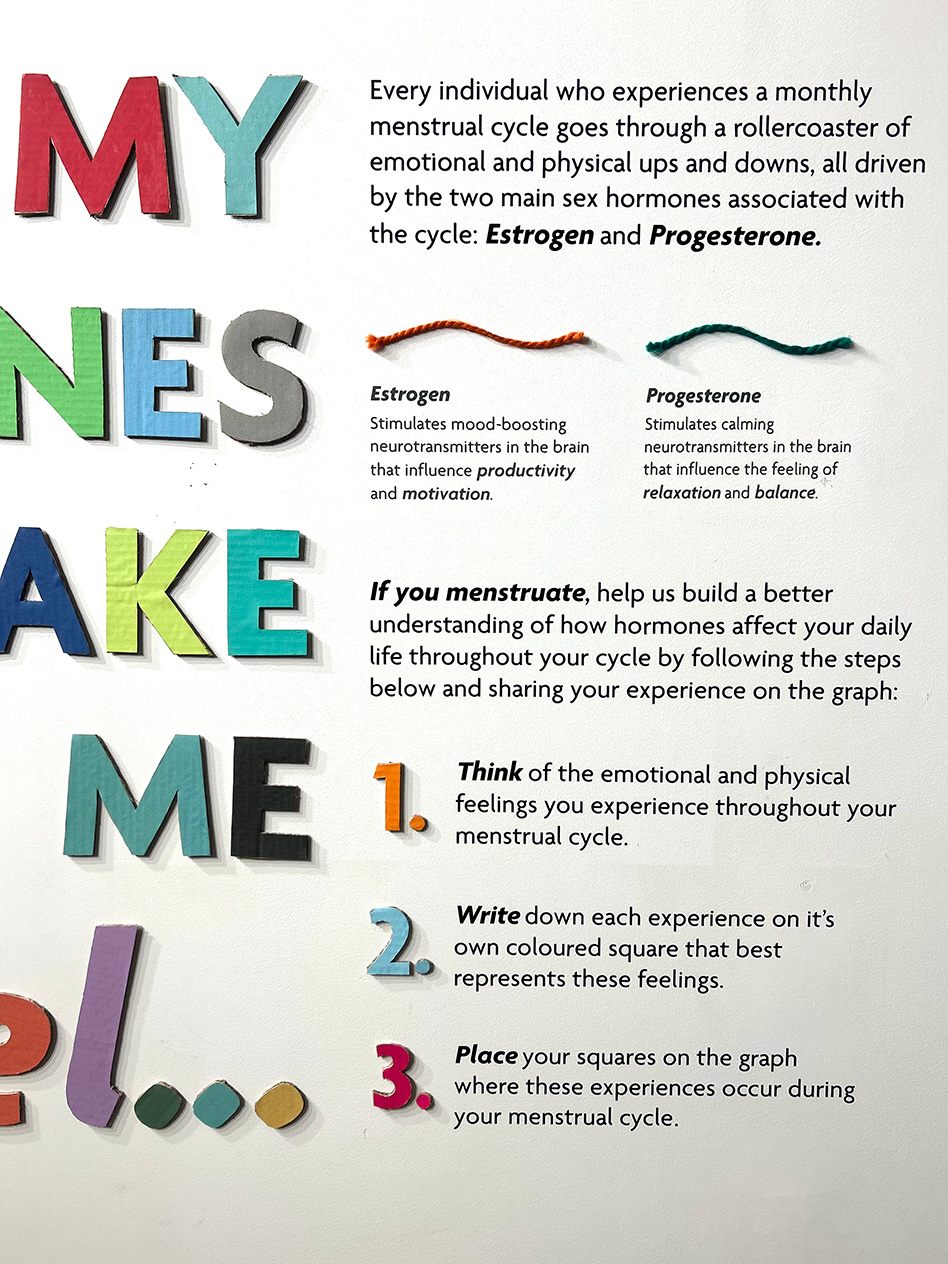
Production Gallery
Final Outcomes
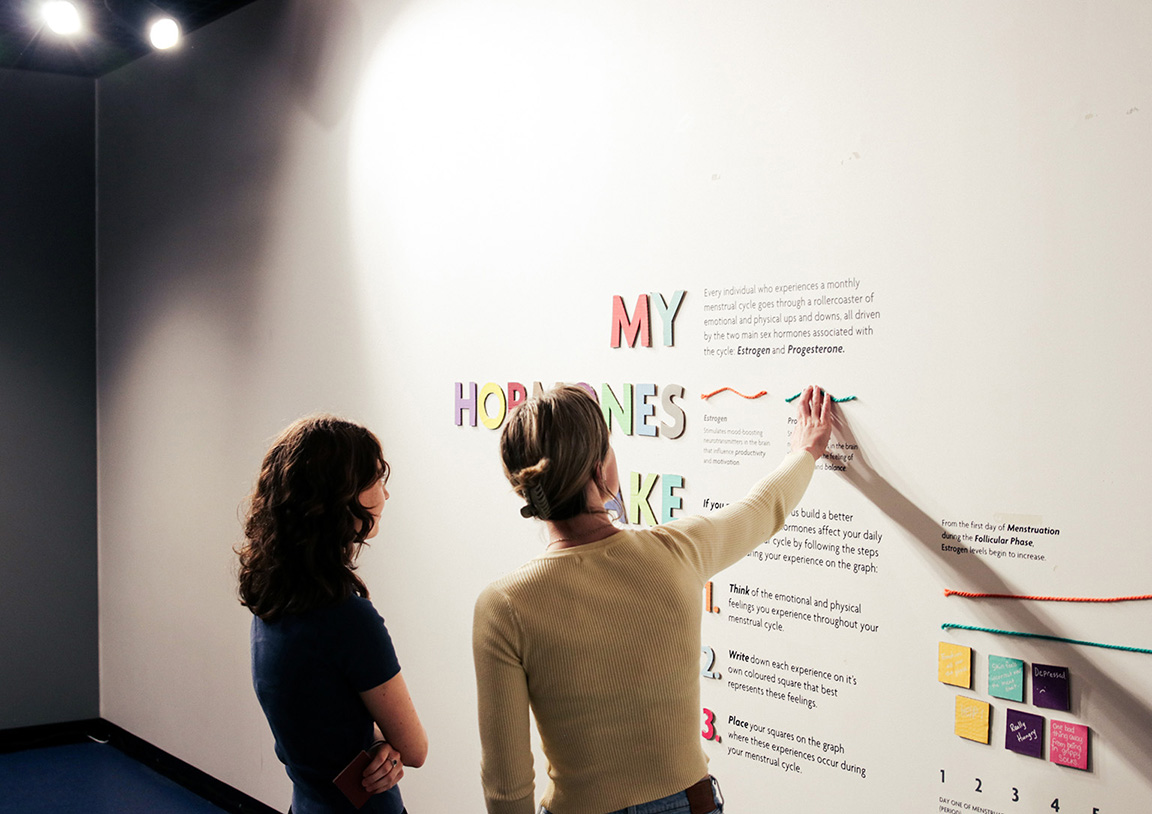
The completed interactive installation and its impact

Reflection & Learnings
Key takeaways and future considerations
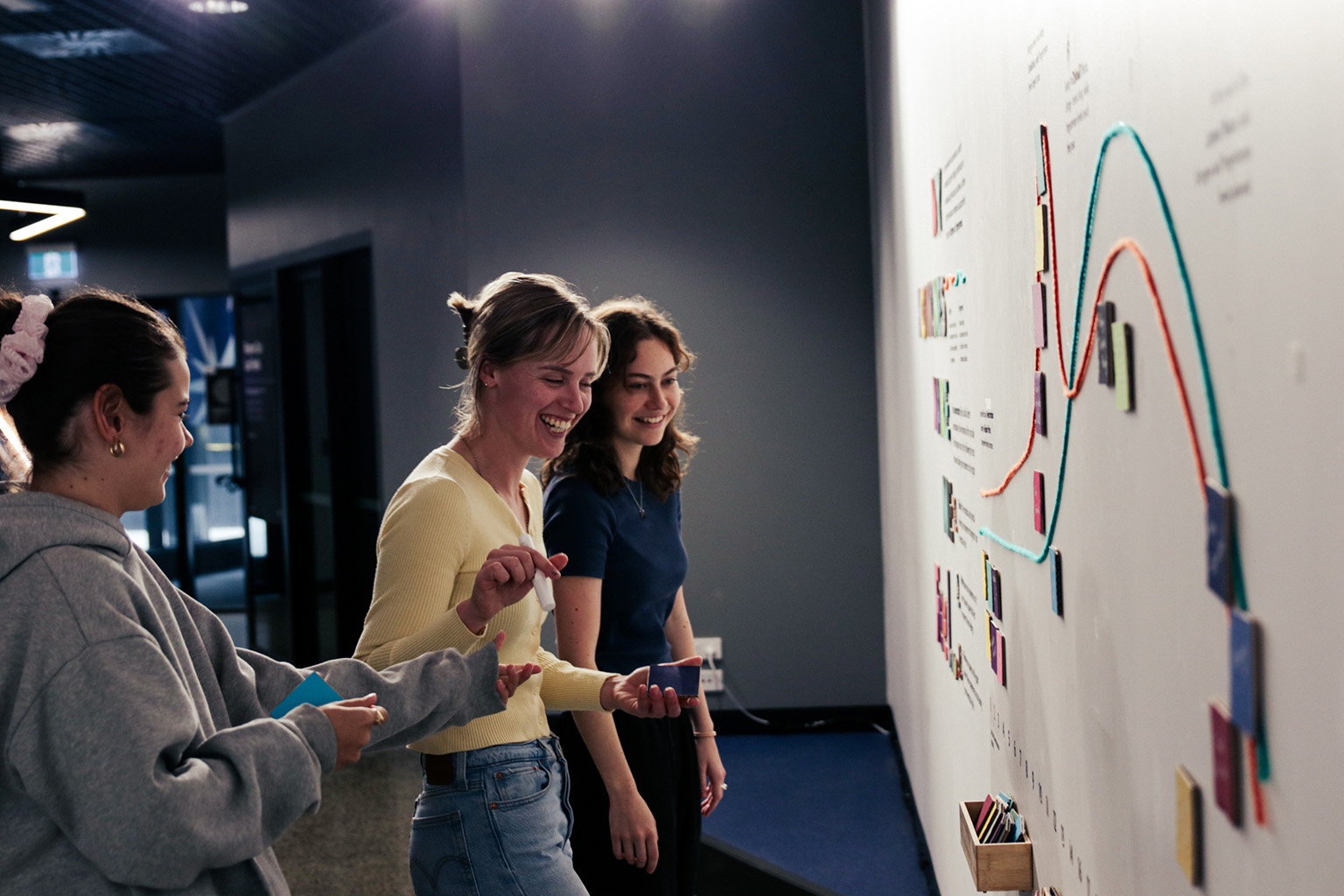
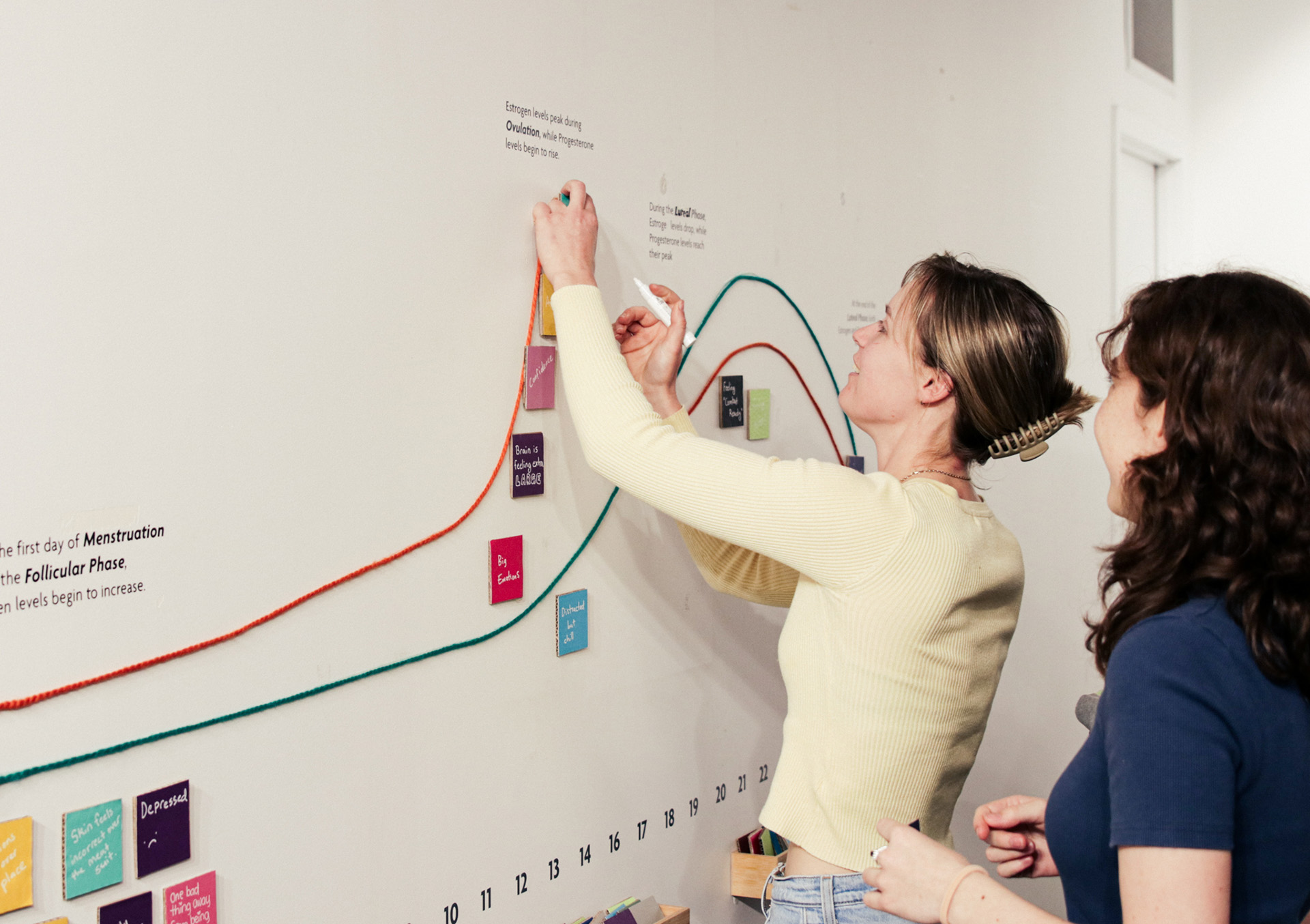
The final user testing of the installation, displayed at my university end-of-year exhibition, highlighted to me the success of my designed learning experience, driven by the integration of all the insights I gathered through my research journey.
Many gathered with friends and colleagues to read, learn and write down how their hormones affect their day-to-day lives. It became an inviting, light-hearted and social space for people from all backgrounds to discuss a misunderstood and sometimes sensitive topic.
I loved having the ability to design and build a project like this which allowed me to step away from my screen, and I look forward to finding more opportunities to do it again in the future.