Tiaki
A NEW ENTERPRISE PROJECT
Reversing Auckland's green space decline through community restoration of Native Trees
Overview
Understanding the problem and developing a sustainable solution
The Problem
The growth in medium to high density urban developments around Auckland is resulting in a huge loss of native green space. As a result, the people living in these areas will continue to feel the impacts of this, without the ability to do anything about it.
The Solution
Tiaki is an organisation that specialises in urban native tree planting and invites eco-friendly plant lovers living with no access to green space to get involved through fostering and raising young native trees that will one day be used in one of their urban tree planting projects.
Research Phase
Understanding user needs and behaviours around indoor plants and native trees
User Research
Through surveys and interviews, I discovered that around 70% of participants owned indoor plants while only a few owned any natives.
"I'd never even thought of buying natives. I don't have the space for them and I didn't think you could grow them in pots"
Key Insights
- 70% of participants owned indoor plants
- Very few owned native plants
- Space constraints were a major concern
- Lack of knowledge about growing natives in pots

Research Question
With these insights in mind, my research became focused on looking into how I could create a brand that would make buying and caring for native plants as attractive to young urban dwellers as their indoor plants.
Ideation & Strategy
Developing the visual identity and brand strategy
Brand Strategy
The Tiaki brand strategy centers around making native tree planting accessible and appealing to urban dwellers. The name "Tiaki" means "to care for" in Māori, reflecting the nurturing aspect of fostering young trees. The brand positioning focuses on sustainability, community involvement, and the emotional connection people have with caring for living things.
The visual identity uses earthy tones and modern typography to bridge the gap between environmental consciousness and contemporary urban lifestyle, making native tree restoration feel both meaningful and trendy.
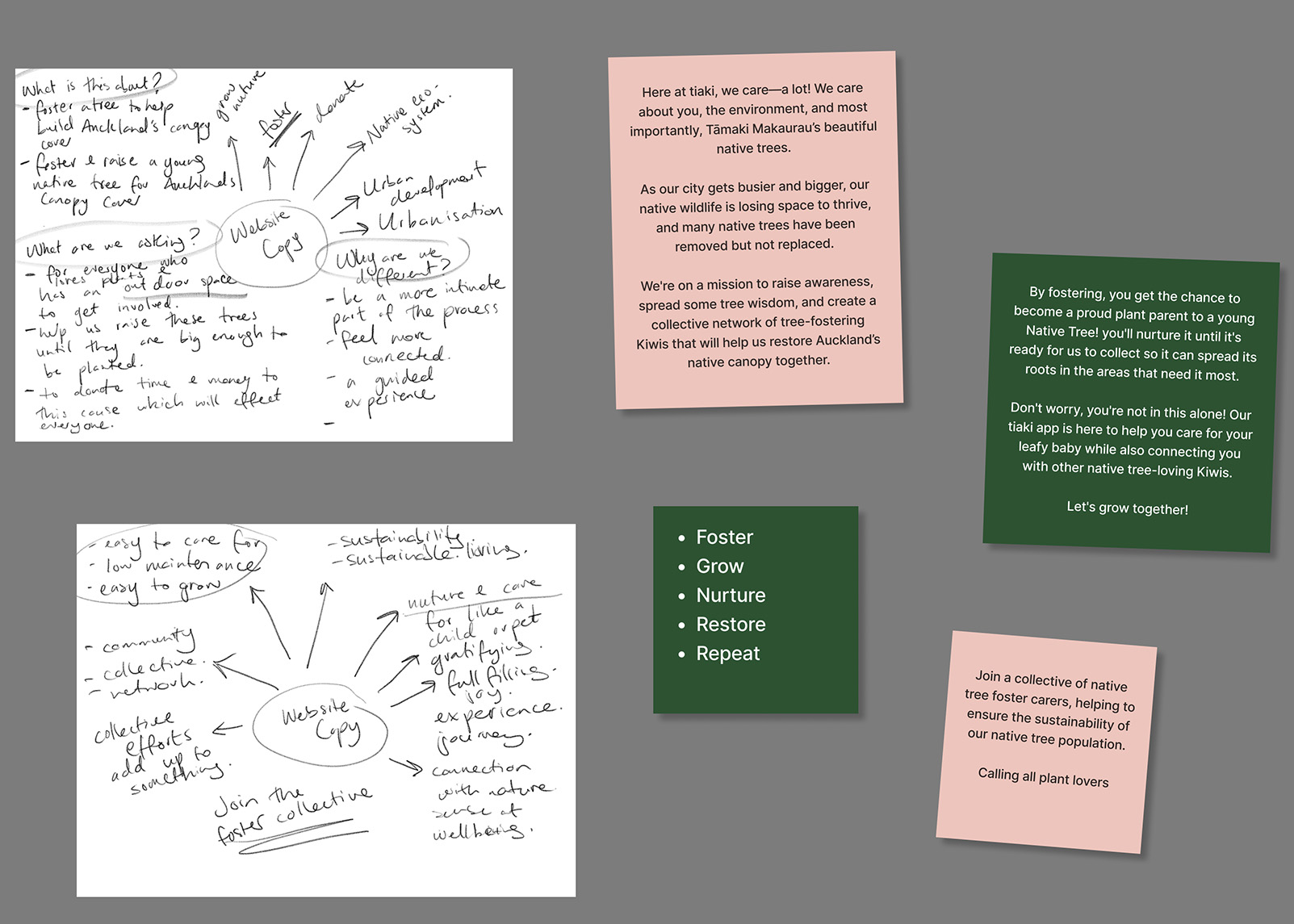
Copywriting
Visual Identity
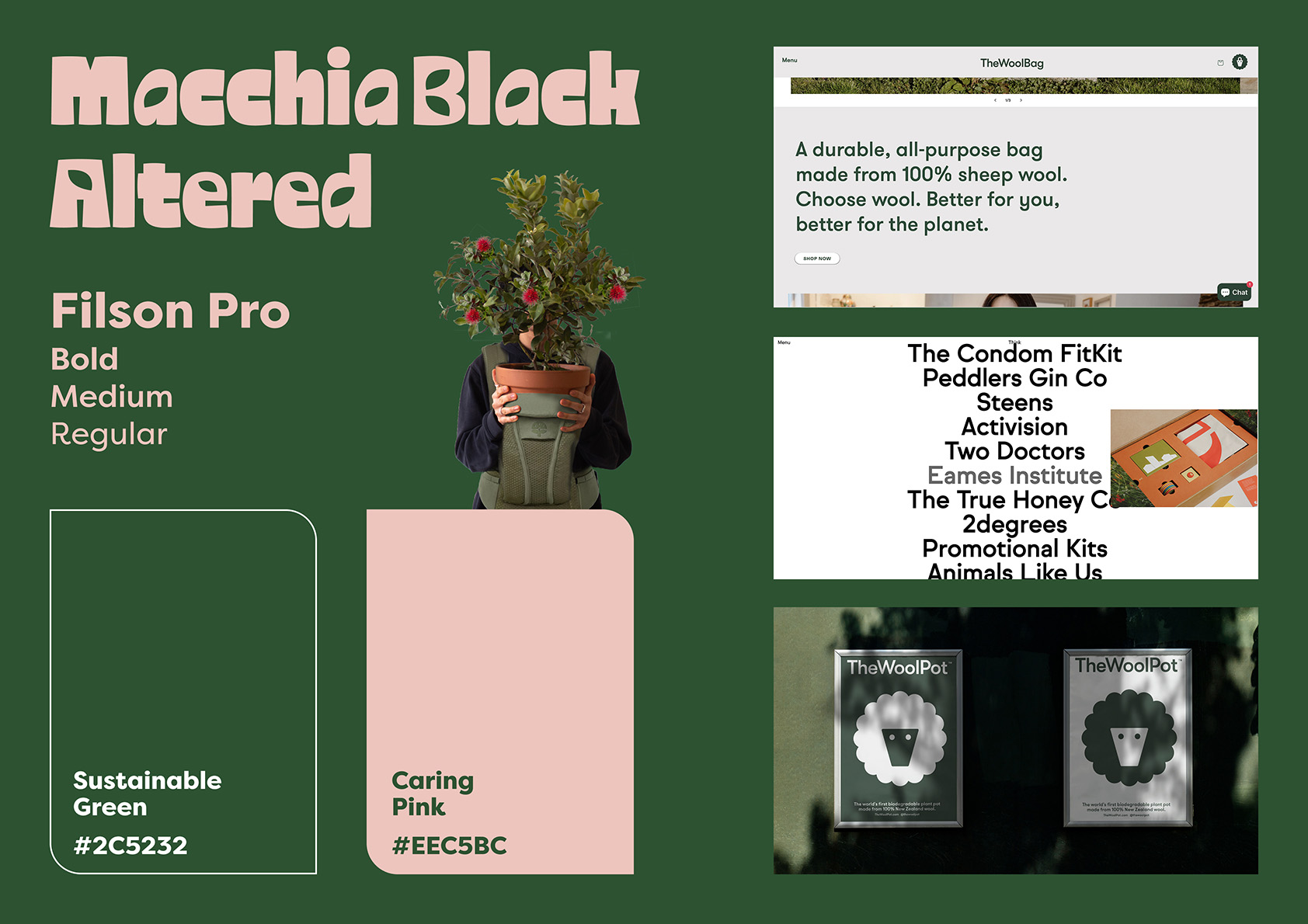
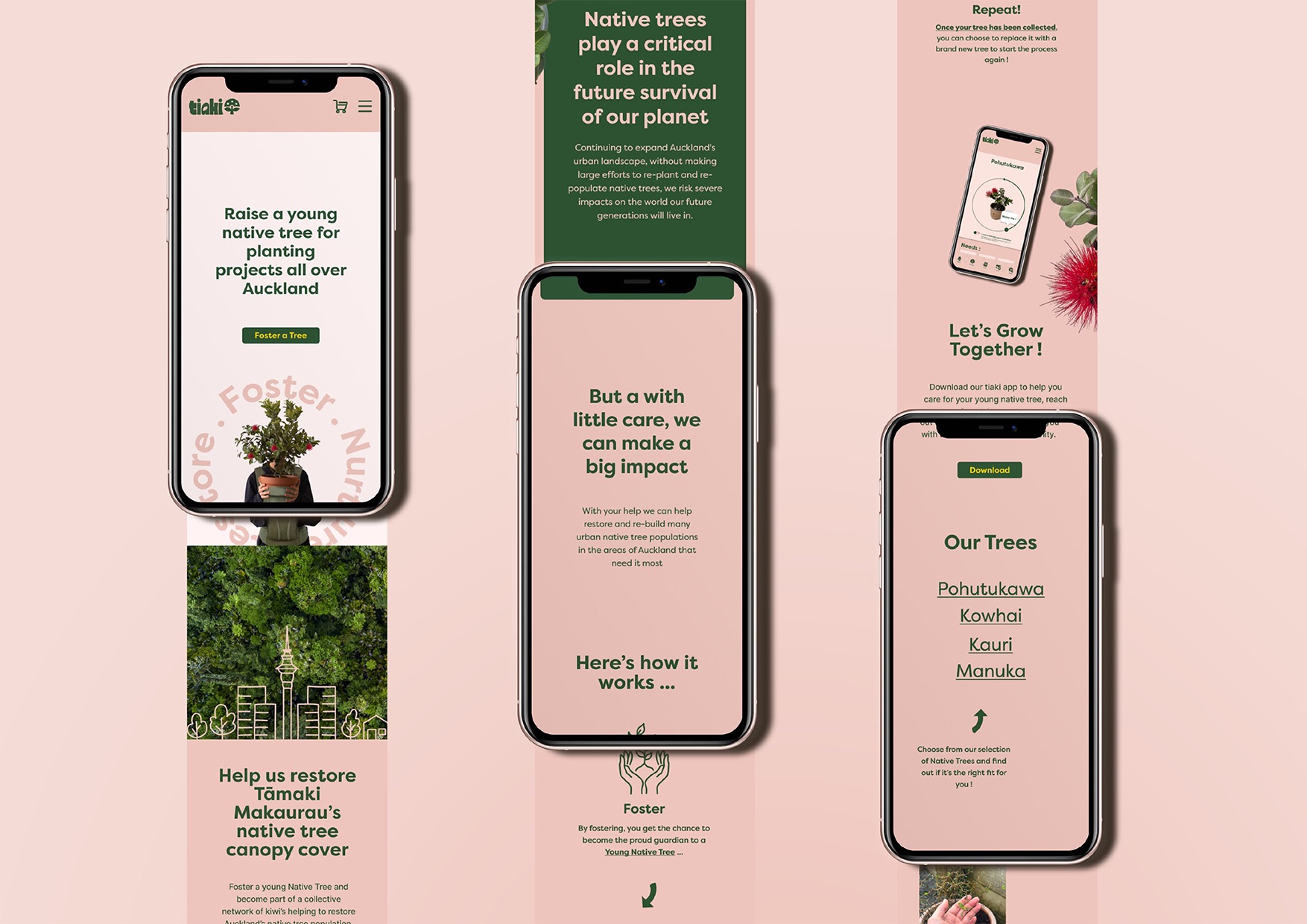
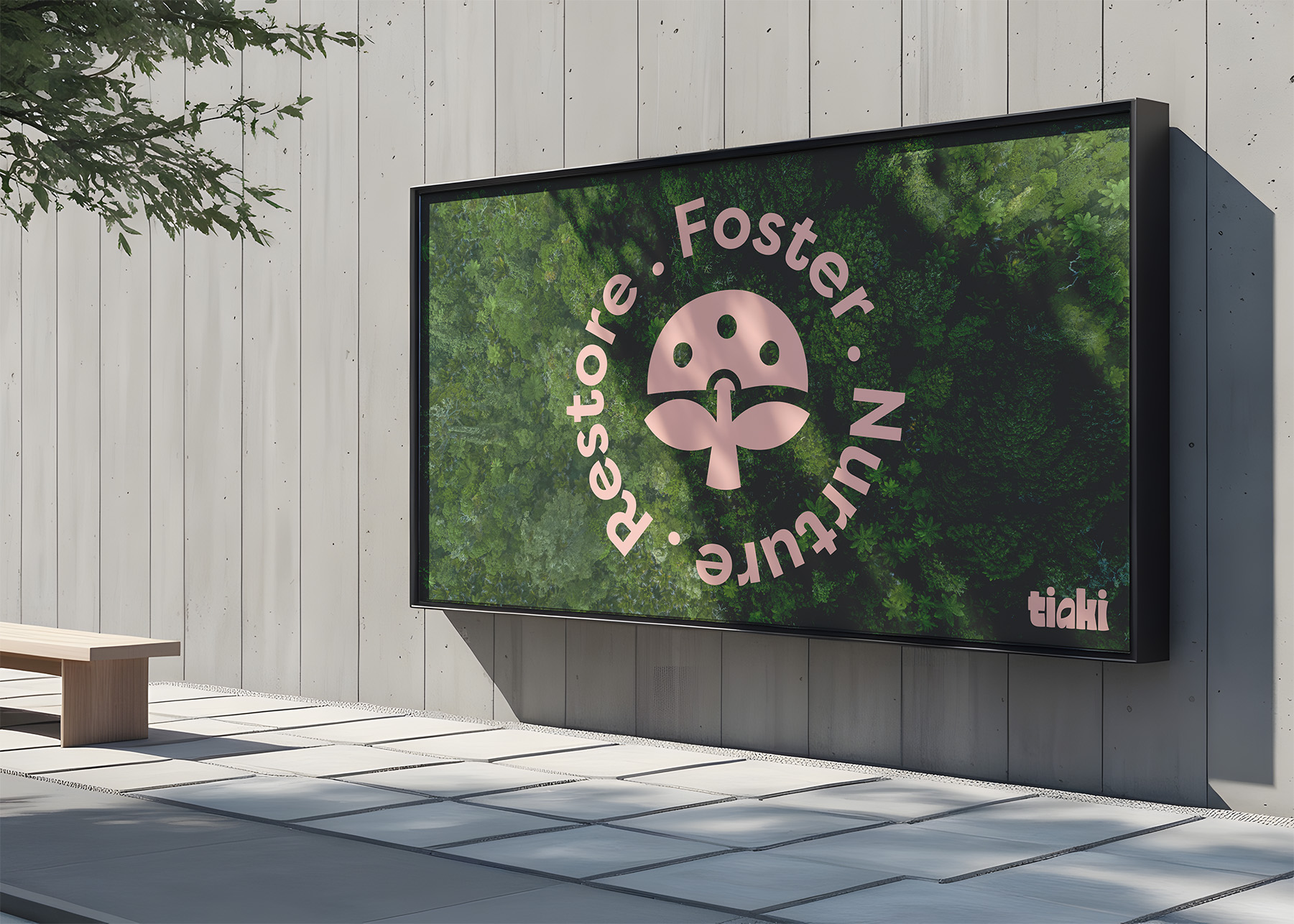
In exploring why people buy and own indoor plants, I developed a modern minimalist visual style using dusty pinks and earthy greens to reflect care and sustainability.
"I use plants as a way of having something to care for, because flatting with a pet isn't an option for me. They also make me feel closer to nature."
Design Principles
- Modern minimalist aesthetic
- Dusty pinks and earthy greens
- Reflects care and sustainability
- Trendy and modern
Design Process
From wireframes to high-fidelity prototypes
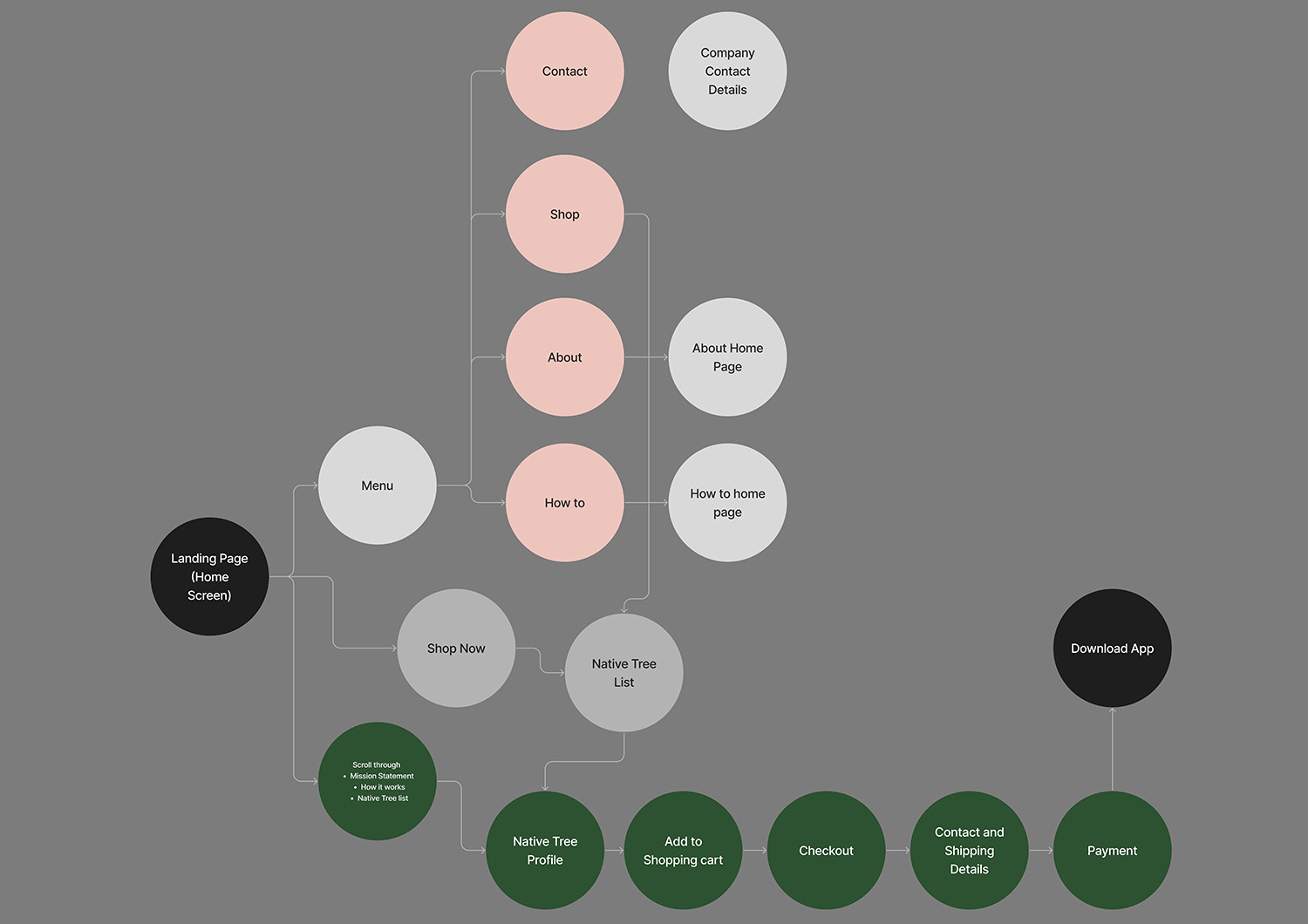
Site Mapping
Started with site mapping to plan layout and information architecture
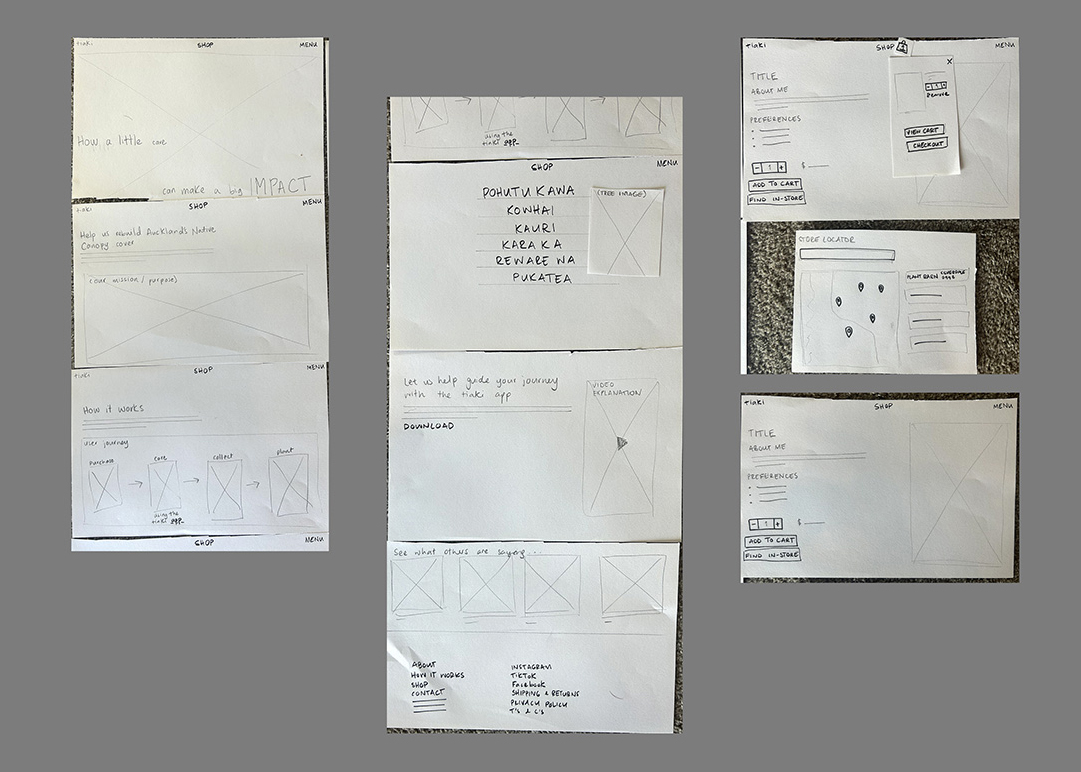
Paper Prototyping
Created paper prototypes to test user flows and interactions
User Testing
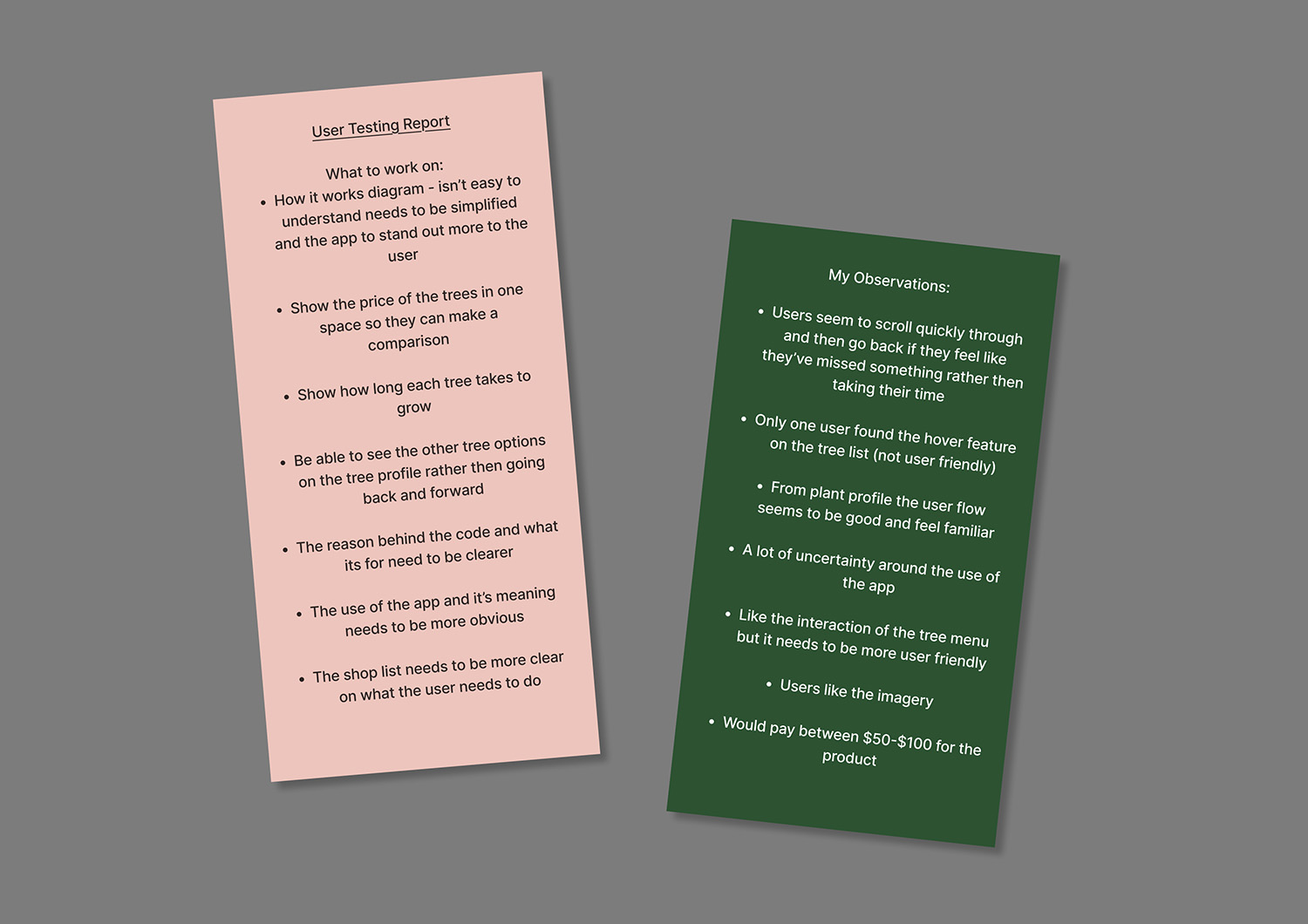
Key Refinements Needed:
- Simplify the journey diagram to make it more clear and easy to understand.
- Further information around the individual tree and the purpose of the app.
- Refine user experience and navigation so it feels more intuitive.
Development & Implementation
Bringing the design to life through code
Technology Stack
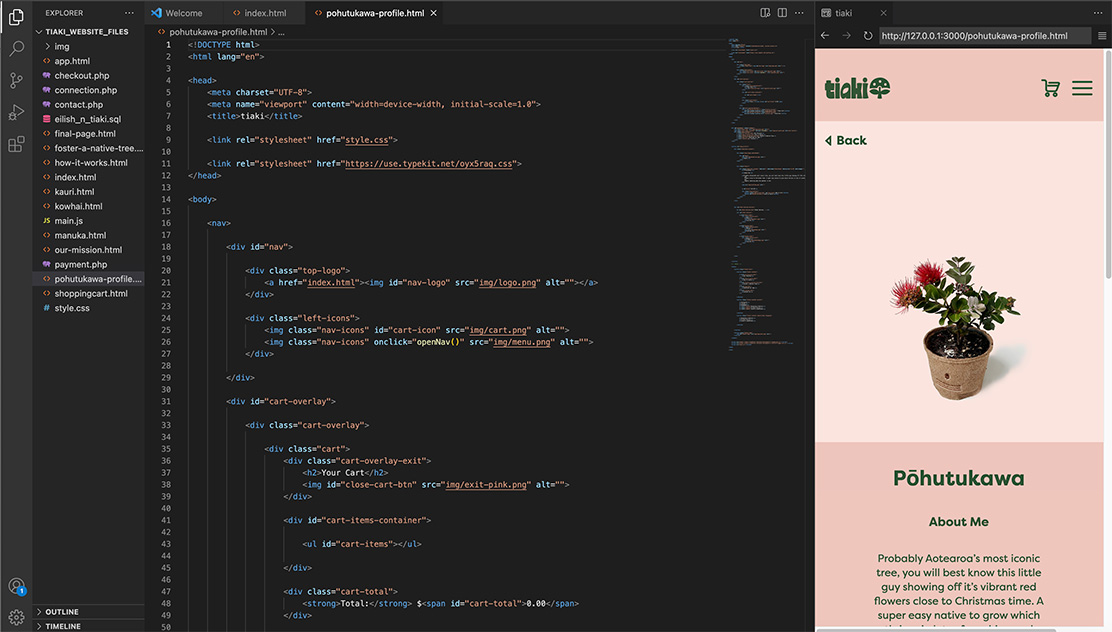
- HTML5 & CSS3 for structure and styling
- JavaScript for interactivity
- Responsive design principles
- Mobile-first approach
Key Features
- Responsive mobile-first design
- Interactive plant selection
- Educational content about native trees
- Easy-to-use purchase flow
Coding in Visual Studio Code
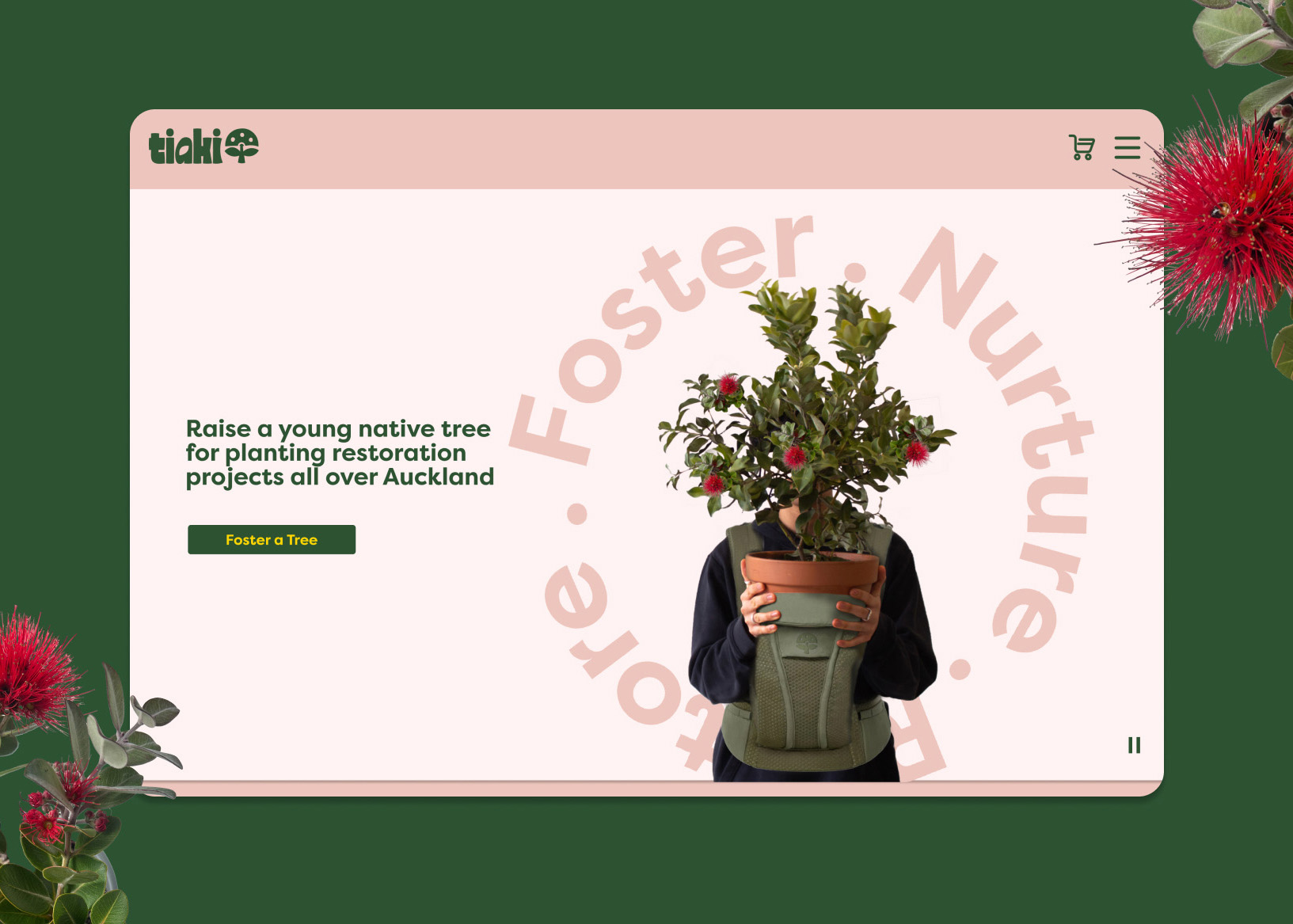
Final Outcomes

Reflection & Learnings
Key takeaways and future considerations
This project was my first ever attempt at both UX and UI design, as well as coding a fully functional webpage.
Although the experience came with its fair share of stressful late-night troubleshooting sessions, it gave me a solid foundation in coding, an incredibly valuable skill in today's ever-growing digital world.
I also discovered a new passion for UX design, especially the research, interviewing, and user testing phases, as these areas allowed me to connect more with people and less with my screen.